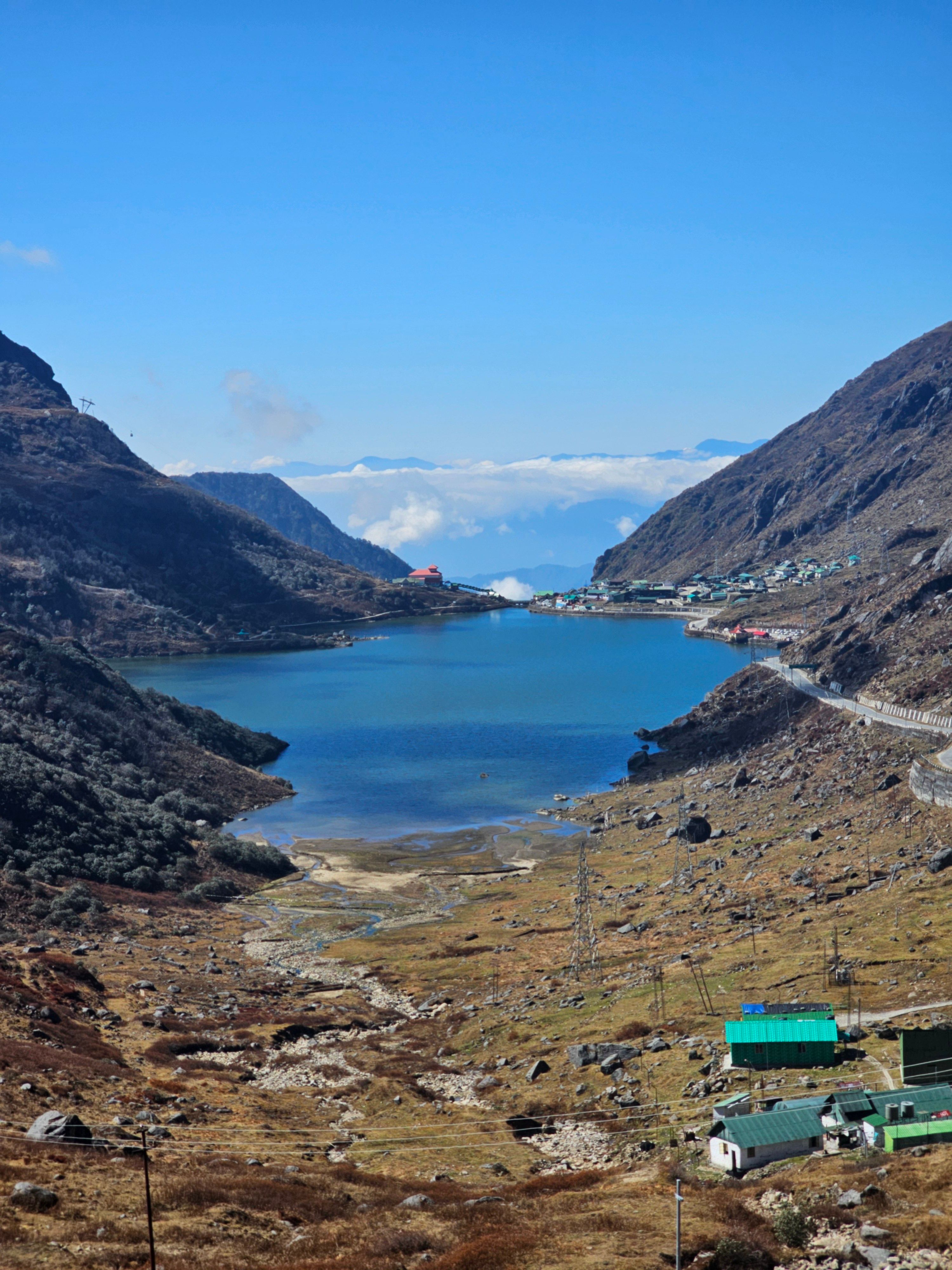
In short
Sikkim in winter offers spectacular Himalayan scenery, with opportunities to experience snow at Tsomgo Lake, Nathula Pass, Yumthang Valley and Zero Point. December to February is the cold-weather season, but snowfall and road accessibility depend on weather conditions. Visitors should arrange the required permits and check official road updates before travelling.
What Is Winter Like in Sikkim?
Sikkim in winter offers opportunities to experience snow-covered Himalayan landscapes, frozen mountain lakes and high-altitude destinations such as Tsomgo Lake, Nathula Pass, Yumthang Valley and Zero Point (Yumesamdong). The official Sikkim Tourism Department identifies December to February as the cold-weather season, with heavy snowfall possible at higher elevations.
However, access depends on government permits, weather conditions and road availability. Indian and foreign visitors have different permit requirements, and foreign nationals are not allowed to visit Nathula. Planning through a registered Sikkim travel operator and checking official road updates before departure are essential for a winter trip.
Whether you are planning a Gangtok holiday, exploring North Sikkim or hoping to experience Himalayan snowfall, understanding the destinations, permit requirements and winter road conditions will help you plan more responsibly.

Winter Weather Conditions in Sikkim
According to the Government of Sikkim's Tourism and Civil Aviation Department, the cold-weather season extends from December to February.
Sikkim's climate changes considerably with elevation. Gangtok and the lower settlements experience different conditions from the high-altitude destinations of East and North Sikkim.
The government's official winter guidance states that:
- Higher elevations above 10,000 feet experience biting cold.
- Temperatures at these elevations rarely rise above 15°C.
- Heavy snowfall occurs during the winter months.
- Some locations can also experience snowfall outside the main winter season.
These are general government climate observations, not a site-specific temperature forecast. Conditions at Tsomgo, Nathula, Yumthang and Zero Point can differ significantly from Gangtok.
Important: Snowfall is weather-dependent. No official source guarantees snow at a particular destination or on a particular travel date.
5 Places to Experience Snow in Sikkim During Winter
Sikkim has several high-altitude destinations where visitors may experience winter snow. Here are five important locations to consider.
1. Tsomgo Lake (Changu Lake): A Frozen Himalayan Lake
East Sikkim | Gangtok–Jawaharlal Nehru Road circuit
Tsomgo Lake, also known as Changu Lake, is one of Sikkim's best-known winter attractions. Surrounded by steep mountain slopes, this glacial lake is particularly striking during winter.
According to the official Sikkim Tourism Department, the lake remains frozen during winter, while the surrounding area is covered with snow.
The lake is also culturally significant to the local Sikkimese community and is regarded as sacred.
What makes Tsomgo special in winter?
- Opportunities to experience the frozen lake and surrounding snow-covered landscape.
- High-altitude Himalayan scenery.
- A popular excursion from Gangtok.
- Seasonal yak and mule experiences and local food stalls, subject to availability.
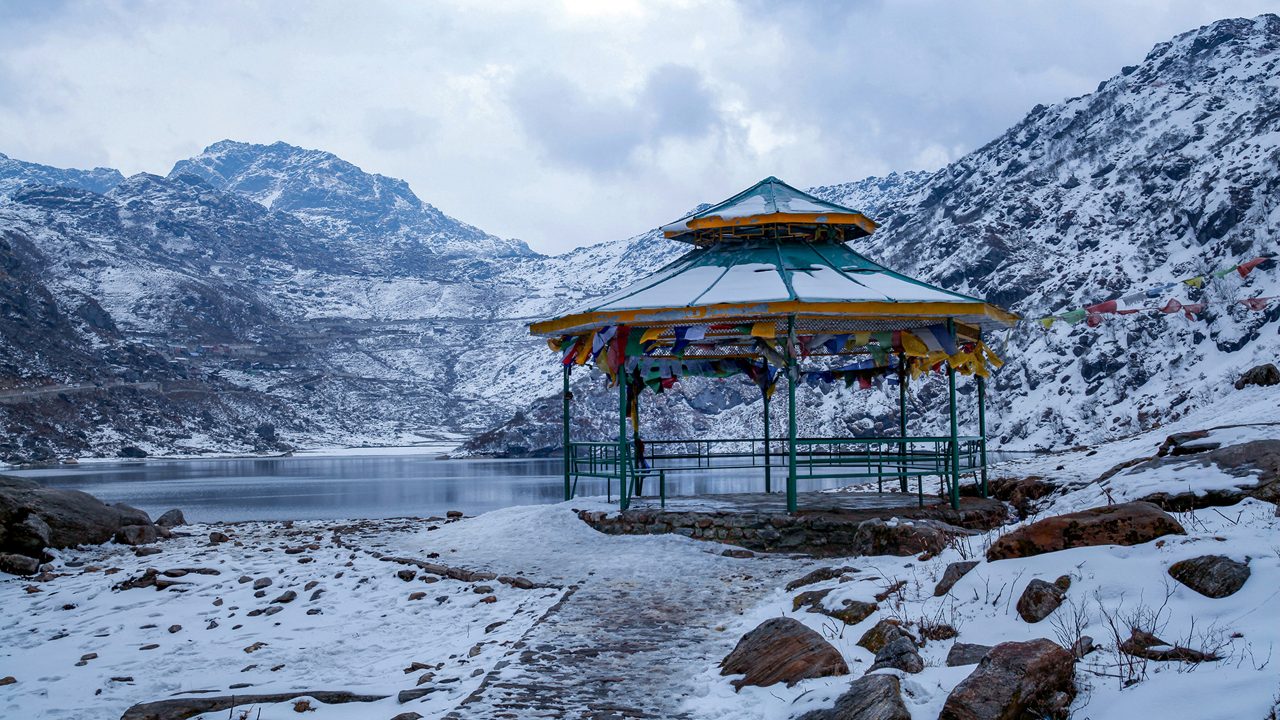
Tsomgo is reached through the Jawaharlal Nehru Road corridor. The route falls within a protected area, so visitors require the applicable permit.
Foreign nationals can visit Tsomgo under specific conditions. The official Tourism Department states that foreign visitors must travel in groups of at least two and apply through a registered travel agency.
2. Nathula Pass: Winter Views Near the India–China Border
East Sikkim | Approximately 14,450 feet
Nathula Pass is a historically significant mountain pass connecting India with the Tibet Autonomous Region of China. Located approximately 56 kilometres from Gangtok, it is one of the region's most recognised high-altitude destinations.
During winter, the high elevation and Himalayan weather can create snow-covered landscapes and extremely cold conditions.
The Government of Sikkim identifies Nathula as a protected destination requiring a permit.
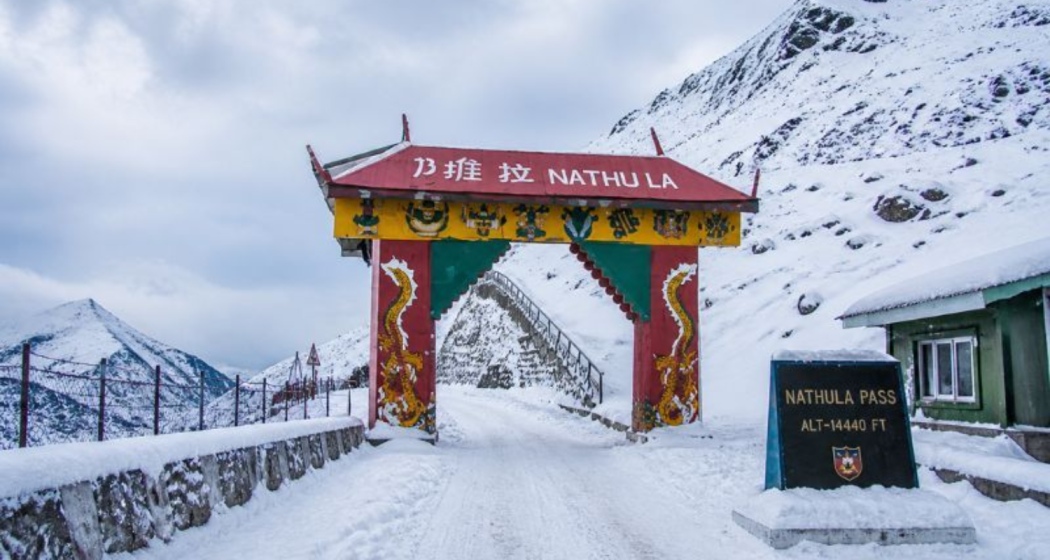
Important permit restrictions:
- Nathula permits are issued for Indian nationals.
- Foreign nationals are not permitted to visit Nathula.
- Visitors must apply through a registered and recognised travel agency.
- Access remains dependent on official permission and prevailing conditions.
Do not assume that a Tsomgo Lake permit automatically guarantees Nathula access. Confirm both destinations separately with your travel operator.
The official Tourism Department pages display different weekday schedules for Nathula. For this reason, a fixed weekly opening schedule should not be relied upon without confirmation from the permit authority.
3. Zero Point (Yumesamdong): An Extreme High-Altitude Winter Destination
North Sikkim | Approximately 16,000 feet
Yumesamdong, commonly searched for as Zero Point, is one of the highest tourist destinations along the Lachung–Yumthang route.
The official Sikkim Tourism Department places Yumesamdong approximately 16 kilometres beyond Yumthang, at an altitude of around 16,000 feet.
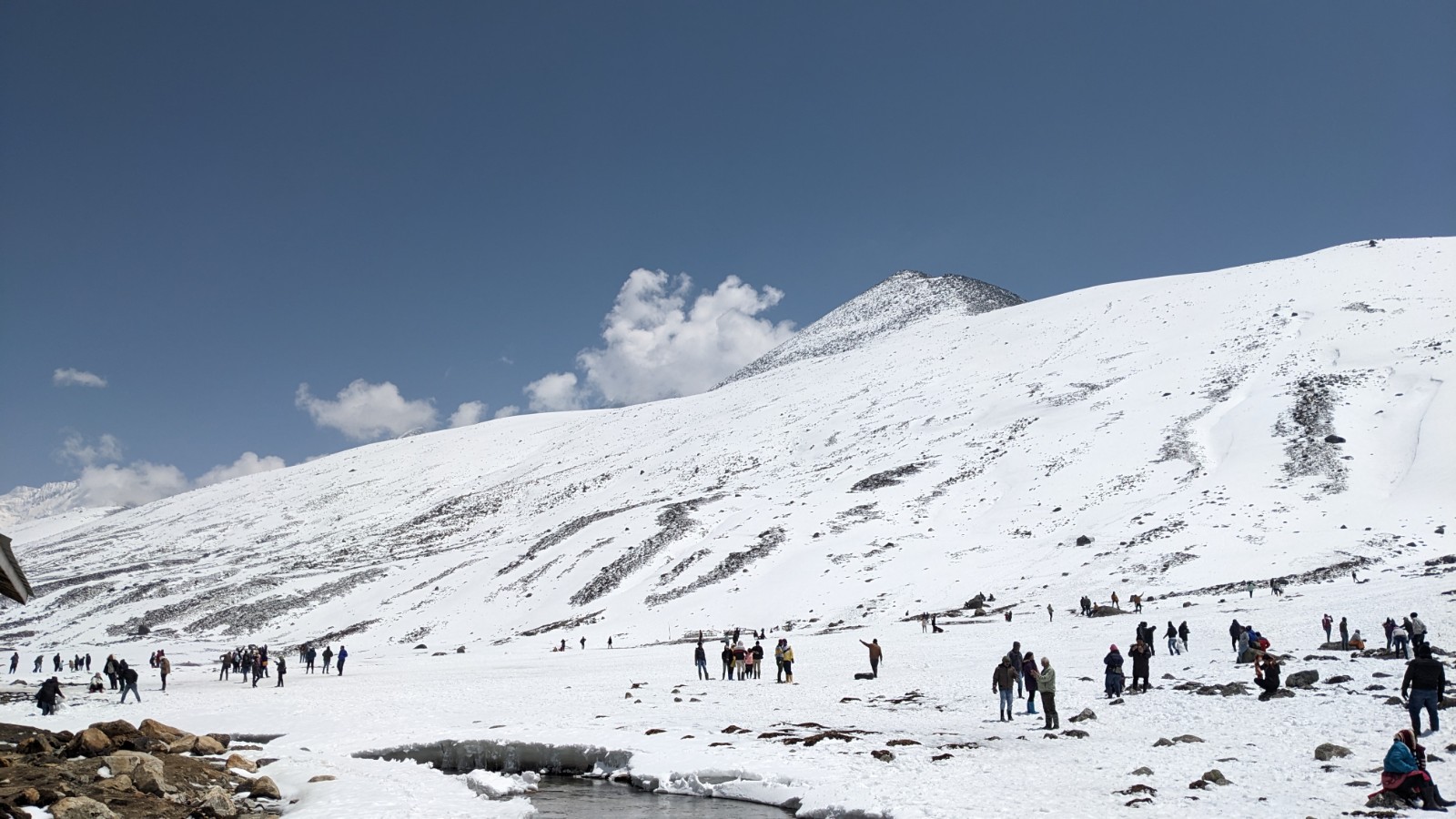
The area is characterised by rugged, largely vegetation-free mountain terrain. The department specifically describes its high-altitude landscape during the November–December and February–March periods.
In winter, the high elevation makes this an especially cold destination, and snowfall may affect the road and surrounding landscape.
Things to understand before visiting:
- Zero Point is beyond Yumthang, not a separate town.
- It falls within the protected North Sikkim travel corridor.
- The applicable permit must cover the Yumesamdong route.
- Access depends on road conditions and official travel clearance.
- Snow accumulation, black ice and other winter hazards can make the final stretch inaccessible.
Do not treat Zero Point as a guaranteed inclusion in every Lachung or Yumthang itinerary.
4. Lachung: A Himalayan Mountain Village
North Sikkim | Approximately 8,000 feet
Lachung is a mountain village in North Sikkim and an important base for exploring Yumthang Valley and Yumesamdong.
According to the official Sikkim Tourism Department, Lachung is approximately 120 kilometres from Gangtok and lies at an elevation of around 8,000 feet.

The village is known for its traditional community structure, surrounding mountain scenery and the Lachung Chu river.
During winter, the surrounding higher mountains may experience snowfall. However, visitors should not assume that snowfall will necessarily occur in the village itself.
What makes Lachung worth including?
- Traditional mountain-village surroundings.
- Access to Yumthang Valley.
- Lachung Monastery and its cultural significance.
- A quieter North Sikkim experience compared with Gangtok.
Travellers generally use Lachung as an overnight base before visiting Yumthang. The journey from Gangtok requires road and permit planning.
5. Yumthang Valley: The Valley of Flowers in Winter
North Sikkim | Approximately 11,800 feet
Yumthang Valley is one of North Sikkim's best-known natural attractions. Located at approximately 11,800 feet, it is popularly known as the Valley of Flowers.
The official Tourism Department describes Yumthang as a landscape of mountain meadows, forests, rivers and surrounding Himalayan scenery.

The valley is also home to Shingba Rhododendron Sanctuary, which has 24 recorded rhododendron species. The department identifies April to May as the flowering period.
Winter offers a very different landscape from the spring flowering season. The high elevation and seasonal cold make Yumthang an important destination for travellers hoping to experience winter Himalayan scenery.
Other attractions include:
- Yumthang River and its surrounding landscape.
- The local hot spring area.
- Mountain views and forest surroundings.
- The road continuing towards Yumesamdong.
The journey to Yumthang starts from Lachung. Its accessibility depends on the condition of the road and the permits issued for the North Sikkim circuit.
Sikkim Travel Permits in Winter: Who Needs Them and Who Arranges Them?
One of the most important things to understand before booking a Sikkim winter trip is the protected-area permit system.
Not all destinations in Sikkim require permits, but Tsomgo Lake, Nathula and the specified North Sikkim routes fall within regulated areas.
According to the Government of Sikkim's Tourism and Civil Aviation Department, a Protected Area Permit (PAP) is required for both Indian and foreign nationals visiting designated protected areas.
Which Destinations Require Protected Area Permits?
| Destination | Permit Requirement |
|---|---|
| Gangtok town | No PAP for ordinary town sightseeing |
| Tsomgo Lake | PAP required |
| Nathula Pass | PAP required; Indian nationals only |
| Lachung | PAP required |
| Yumthang Valley | PAP required |
| Yumesamdong (Zero Point) | PAP required |
The government identifies the Tsomgo, Baba Mandir and Nathula corridor from the 3rd Mile Police Check Post on the Jawaharlal Nehru Road axis as a protected area.
For North Sikkim, the regulated route covers the areas beyond the Phidang, Sankalang and Toong police checkpoints, including the Lachung and Yumesamdong axis.
Permits for Indian Citizens
Indian citizens require a PAP to visit designated protected destinations.
The official Tourism Department lists the following documents for Indian applicants:
- Valid Indian passport, Voter ID or Indian driving licence, or a Central/State Government-issued document establishing nationality.
- Birth certificate for minors.
- Two passport-sized photographs.
Important: The government guidelines explicitly state that Aadhaar is not accepted as proof of citizenship or nationality for this permit process.
Applications are accepted in advance during office hours, with verification and scrutiny before the permit is issued. The official portal specifies advance submission, including one-day-prior application guidance.
Do not leave the permit process until you reach the destination.
Permits for Foreign Nationals
Foreign visitors have additional entry and protected-area requirements.
According to the official Sikkim Tourism Department:
- Foreign nationals require a Restricted Area Permit (RAP) for entry into Sikkim, subject to the applicable exemptions.
- A separate PAP is required for protected destinations.
- Foreign visitors to Tsomgo must travel in a group of at least two and apply through a registered travel agency.
- Foreign nationals are not permitted to visit Nathula.
- The published foreigner-pass validity is one day for Tsomgo and between three and five days for the specified Lachung, Lachen, Yumthang, Yumesamdong and Thangu circuit.
Foreign visitors should confirm their nationality-specific requirements with the Tourism Department before making non-refundable travel arrangements.
Who Actually Issues the Permits?
This distinction is important.
The Tourism and Civil Aviation Department, Government of Sikkim, is the government authority responsible for the permit system.
Registered Sikkim-based travel agencies and tour operators facilitate the application process.
The Government's press release dated August 19, 2026 explains that permit applications for restricted and protected destinations will continue to be routed through registered Sikkim-based tour operators and travel agencies, with processing under the Tourism Department.
The government also specifies that permits are non-transferable.
Therefore, a travel agency helps arrange and submit the application, but it does not independently issue government permits.
Before booking, confirm that your operator is registered in Sikkim and ask for confirmation of the approved permits for every destination in your itinerary.
Can Roads Close in Sikkim During Winter Snowfall?
Yes. Winter road disruption is an important risk when travelling to North Sikkim and high-altitude locations.
Snowfall, black ice, adverse weather and other road conditions can interrupt travel. A permit does not override road restrictions or an official closure.
An important official update came from the Mangan District Police and District Administration's stakeholder meeting on August 19, 2026.
The Government of Sikkim reported that officials identified the following challenges in the Lachung sector:
- Narrow and single-lane mountain roads.
- Snowfall and black ice.
- Vehicle breakdowns.
- Restricted road widths at bridges and bends.
- Traffic congestion around Yumthang and Yumesamdong.
- Avalanche-prone stretches between Lachung, Yumthang and Zero Point.
The meeting also documented major landslides and road blockages in 2024 and 2025 that stranded tourists and drivers and required coordinated evacuation efforts.
This is an official assessment of road vulnerabilities, not a notice that the roads are currently closed.
How to Check Road Conditions Before Travelling
Before leaving Gangtok for North Sikkim:
- Check the Sikkim Roads and Bridges Department's official road-conditions page.
- Confirm the latest situation with the Mangan District Administration or local police.
- Ask your registered travel operator to reconfirm road and permit status before departure.
- Follow instructions issued by police, district administration and road authorities.
- Keep an additional day in your itinerary for possible disruptions.
Never attempt a restricted or closed road simply because you already have a permit or a vehicle waiting.
What Should You Pack for Sikkim in Winter?
The official Sikkim Tourism Department recommends heavy winter clothing for high-altitude travel.
For a journey covering Gangtok, Tsomgo, Nathula, Lachung and Yumthang, pack according to the highest destination on your itinerary.
Winter Clothing
- Thermal innerwear.
- Heavy insulated winter jacket.
- Fleece or woollen layers.
- Woollen cap and neck warmer.
- Waterproof gloves.
- Thick woollen socks.
Footwear
- Waterproof winter shoes or boots.
- Shoes with good grip for icy surfaces.
- Extra socks.
Personal Essentials
- Sunglasses for bright snow-covered surroundings.
- Sunscreen and lip balm.
- Moisturiser.
- Personal prescription medication.
- Basic first-aid supplies.
Travel Documents
- Original government-approved photo identification.
- Required passport and visa documents for foreign travellers.
- Permit copies and travel confirmation.
- Emergency contact details.
Keep your essential winter clothing in an accessible bag rather than inside luggage that may remain in Gangtok during a North Sikkim excursion.
How to Plan a Gangtok and North Sikkim Winter Trip
Gangtok is a practical starting point for exploring East and North Sikkim.
A longer itinerary can combine Gangtok sightseeing, Tsomgo Lake, Lachung, Yumthang and, when officially accessible, Yumesamdong.
A sample route structure is:
| Day | Suggested Experience |
|---|---|
| Day 1 | Arrive in Gangtok and settle in |
| Day 2 | Gangtok sightseeing and permit coordination |
| Day 3 | Tsomgo Lake excursion, subject to permits and road conditions |
| Day 4 | Gangtok to Lachung via North Sikkim |
| Day 5 | Yumthang Valley and optional Yumesamdong, subject to clearance |
| Day 6 | Return towards Gangtok, depending on road access |
| Day 7 | Departure or additional sightseeing |
This is an illustrative route, not a guaranteed operational schedule. The number of days required can change with local restrictions, permitted routes and weather-related disruptions.
For a winter journey, avoid tight flight connections and allow sufficient flexibility.
Frequently Asked Questions About Sikkim in Winter
1. Which places receive snowfall in Sikkim during winter?
High-altitude destinations including Tsomgo Lake, Nathula, Yumthang and Yumesamdong can experience winter snow. The Government of Sikkim identifies heavy snowfall as a winter condition at higher elevations. However, snowfall on a specific travel date is not guaranteed.
2. Is Tsomgo Lake frozen in winter?
The official Sikkim Tourism Department describes Tsomgo Lake as remaining frozen during winter, with surrounding snow cover. Actual conditions on a particular visit should still be checked.
3. Can tourists visit Nathula Pass in winter?
Indian nationals can apply for a Nathula permit through a registered travel agency. However, access remains subject to official permission and prevailing conditions. Foreign nationals are not permitted to visit Nathula.
4. Is Zero Point open during winter?
Zero Point, officially referred to as Yumesamdong by Sikkim Tourism, falls within the North Sikkim protected-area circuit. Its accessibility depends on permits, road conditions and official clearance. There is no guaranteed daily winter opening.
5. Do Indian citizens need permits for North Sikkim?
Yes. Indian citizens require Protected Area Permits to visit the designated North Sikkim protected routes, including Lachung, Yumthang and Yumesamdong.
6. Can foreign tourists visit Yumthang Valley?
The official Tourism Department's permit guidelines include Lachung, Yumthang and Yumesamdong in the foreigner-pass system. Foreign visitors must meet the applicable entry and permit requirements and should arrange the process through an authorised registered operator.
7. Can roads close because of snowfall in Sikkim?
Yes. Official Mangan District Police observations dated August 19, 2026, identify snowfall, black ice, adverse weather and avalanche-prone road stretches in the Lachung–Yumthang–Zero Point sector as important travel and traffic risks.
8. Who arranges Sikkim travel permits?
Registered Sikkim-based travel agencies and tour operators facilitate applications. The Tourism and Civil Aviation Department and designated government/police authorities handle the official permit processing and issuance.
9. Is December a good month for a Sikkim winter trip?
December is within Sikkim's officially identified cold-weather season. It can offer winter scenery at higher elevations, but access to North Sikkim and other snow destinations depends on weather, roads and permit availability.
10. Can I take my own vehicle to Tsomgo Lake and North Sikkim?
Do not assume that a vehicle registered outside Sikkim can enter regulated tourist routes. The Government's August 19, 2026 announcement states that outside-State vehicles, including bikes, will not be permitted on regulated tourist routes, while Sikkim-registered taxis and eligible bikes are allowed under applicable rules. Confirm the current vehicle requirements before departure.
Plan Your Gangtok and North Sikkim Journey with Darjeeling Trips
A winter journey through Sikkim is an experience worth planning carefully. From Gangtok's mountain surroundings to the frozen landscape of Tsomgo Lake and the high-altitude valleys of Lachung and Yumthang, the region offers remarkable Himalayan experiences.
But getting the route, permits, local transport and road conditions right is just as important as choosing the destinations.
Explore our Sikkim, End to End – 10 Nights, 11 Days private journey, covering Gangtok, Lachung and other important parts of Sikkim.
Ready to Plan Your Next Sikkim Trip?
Explore the Sikkim End-to-End Package
Or explore our complete collection of private Sikkim journeys.
Contact Us on WhatsApp
Tell us your preferred dates, number of travellers and the places you want to visit. Our travel designers will help you understand the permit requirements, route feasibility and suitable travel arrangements before you confirm your journey.
North Sikkim departures, Nathula visits and Zero Point excursions are subject to government permits, seasonal availability and official road clearance. No snowfall or destination access is guaranteed.
Sources we checked for this note (4)
- Official Sikkim weather, winter season and snowfall information
- Protected Area Permit requirements and destination-wise permit information
- Restricted Area Permit requirements for foreign visitors
- Official road-condition updates from the Government of Sikkim
Checked November 2026.


