Planning questions, answered
The questions guests ask us, answered plainly
Twenty-one answers that sit across the planning guides rather than inside any one of them: nights and routes, what a journey comes to, ID for a mixed party, festival dates, the road at night, and how high you sleep.
In short
What do most guests ask before they book a journey in these hills?
Plan eight nights for a first visit to Darjeeling and Sikkim, and five to seven for Bhutan. Travel from October to mid December or March to May. A party mixing Indian, OCI and foreign passports is normal here, and the differences bite in Sikkim and Bhutan, so say early who holds what. Bhutan charges ₹1,200 a night for Indians and US$100 for most others. Six private nights in the hills start at about ₹95,000 per person.
Start here
Six groups, twenty-one answers
These are the questions that sit across the planning guides rather than inside one of them. Where a guide answers something in full, the group below says which guide, so you never read the same answer twice.
-
Nights, routes and the order
How many nights a first visit needs, which journeys fit five or fewer, whether to run Bhutan before Darjeeling or after, and what to do with flights you have already booked.
-
What it comes to
The least you could spend, why a Bhutan week runs several times a Sikkim one, what a foreign passport adds, and the tax an Indian resident pays on a journey that crosses a border.
-
ID for a mixed party
What a party of Indian, OCI and foreign passports can and cannot do on the same morning, and why Aadhaar will not carry you far in these hills.
-
Months and festival dates
The fortnight that suits every destination at once, why the festival dates move by weeks each year, and the five journeys built to run between December and February.
-
The road, and two tickets
How you reach us at three in the morning from a road with no signal, and the two bookings in these hills that cannot be made on the day you want them.
-
How high, and who should skip it
The height you sleep at on each journey, what a chain of hairpins does to a weak stomach, and who should stay in Gangtok while the rest of the party drives up to Tsomgo.
Nights and routes
Planning and booking
How long to come for, which way round to run it, and the small facts that set a start day. The sequence from first message to the drive home, and a sample quote laid out line by line, are on How it works; airports, trains and drive times are on Getting here.
How many nights do we need for a first visit to the Eastern Himalaya?
Eight nights lets you see Darjeeling, Gangtok and Pelling without rushing, which is why The First Time runs to eight. With five or six nights, choose two bases, such as Darjeeling and Kalimpong, or Gangtok and Pelling. Bhutan deserves five to seven nights of its own. We plan two or three nights per place, because every change of house costs a morning on hill roads.
Which journeys fit five nights or fewer?
Fifteen of the forty-one do. The shortest is two nights on a tea estate. At three nights we build round a single base: Kalimpong's ridge, Gangtok with the high lake, a room facing Kanchenjunga, a steam charter weekend, or Kathmandu's three old cities. Four and five nights add the Dooars rhinos, the Old Silk Route, the Singalila Ridge, Tihar week, the Everest flight and Dhulikhel. What it costs prices every one of them.
Can we start in Bhutan and finish in Darjeeling?
Yes, and Drukair decides which way round. KB131 flies Bagdogra to Paro on Tuesdays and Saturdays, so a Bhutan-first journey begins on one of those two days. Coming back, KB130 leaves Paro at 16:20 and lands at Bagdogra at 16:35 on Mondays and Fridays from October 2026 to January 2027, which is late for the three-hour climb to Darjeeling, so we usually put a night in the Dooars or below the hills before it. In April and early May 2027 the same flight leaves at 11:50. By road the crossing is Phuentsholing either way, and your Bhutanese guide must be registered 48 hours before it.
We have already booked our flights. Can you plan around them?
Yes, and it costs you nothing to send the flight numbers with your first note. Two things move around them. The first and last drives: landing at Bagdogra by early afternoon leaves the three hours to Darjeeling in daylight, while a flight home before noon usually means the last night lower down, near Bagdogra or in the Dooars, rather than on the ridge. And anything booked on a fixed day, because the border flights into Bhutan and Nepal run twice a week, not daily.
Does the day of the week we start matter?
Sometimes. Kalimpong's Haat Bazaar fills on Wednesdays and Saturdays, Nathu La never opens on Mondays or Tuesdays, Jaldapara runs no safaris on Thursdays, and the permit office at Phuentsholing works Monday to Friday, 09:00 to 17:00. Drukair's Bagdogra flights run on the two days in each direction set out above. We set your start day around whichever of these matters to your route.
Can one person travel alone with you?
Yes. Every journey is private, so a single guest has the car, driver and guide alone. The price per person rises, because rooms, cars and guides cost the same for one as for two, and some houses add a single supplement. A foreign national travelling alone should know that Tsomgo and the Goecha La trek require at least two foreign guests together, so we plan around them.
Prices and tax
Prices and what moves them
The money questions guests raise before they ask for a quote. Every from-price, what it includes, how a family is priced and where the money goes are on What it costs; the deposit, the balance and refunds are on How it works.
What is the least we could spend on a private journey with you?
Our shortest journeys start at ₹60,000 per person, twin share, for three nights on The Quiet Ridge in Kalimpong, and ₹75,000 for two all-inclusive nights at Glenburn. Six to eight nights in Darjeeling and Sikkim run from ₹95,000 to ₹2,65,000 per person, and Bhutan starts at ₹3,25,000. What it costs shows each journey's from-price and what it includes.
Why does Bhutan cost so much more than Sikkim?
Three costs Sikkim does not have. Bhutan charges a Sustainable Development Fee for every night, at one rate for Indian nationals and a much higher one for most other passports, as What it costs sets out with the dates. A licensed Bhutanese guide must be with you from entry to exit. And its best lodges, such as Amankora and COMO, cost far more a night than hill hotels in India. Flights into Paro add more again.
Do guests on foreign passports pay more?
In a few places. In Bhutan the nightly fee is charged at the dollar rate rather than the Indian one, with a US$40 visa on top. Nepal charges foreigners higher domestic air fares and monument fees, and a visa from US$30. Park fees on the Goecha La trek run about ₹5,000 higher per person, and on the Singalila Ridge foreign guests sleep in the government lodges on the Indian side rather than the family lodges over the border in Nepal, which we price separately. Elsewhere in India the differences are small.
Is TCS charged on Bhutan and Nepal journeys?
If you are an Indian resident and the journey crosses into Bhutan or Nepal, usually yes, at 2 percent of the package since April 2026. It is worth understanding what it is not: it is not our charge and not a lost cost, but an advance against your own income tax, which you set off or reclaim when you file your return. Your quote shows the amount as its own line, and What it costs explains the rule and what changed.
What will we pay for on the road that the quote does not cover?
Usually drinks from the bar, laundry, spa treatments beyond any included, shopping and tips. Some monuments charge camera fees, a few old hotels charge for lighting the fire, and festive weeks bring hotel supplements, such as the Windamere's 25 percent on 24 to 26 and 31 December. Flights are extra unless the journey names them, and your quote lists everything left out.
ID and passports
Passports, ID and a mixed party
Two questions that cut across all four borders at once. Who needs which permit, place by place, with the fees, the filing times and the age limits, is on Permits and visas.
Our party mixes Indian and foreign passports. Is that a problem?
Not if we know early. Indian citizens need only photo ID for most of Sikkim, while foreign and OCI guests need Sikkim's Restricted Area Permit, filed online before the border. A few places admit Indian citizens only, notably Nathu La and the Zuluk road, so we plan a different morning for the rest of the party rather than a shorter one. In Bhutan the nightly fee differs by passport, as What it costs sets out.
Does Aadhaar work as ID in this region?
Rarely, so do not rely on it. Nepal's airports refuse Aadhaar, PAN cards and driving licences from Indian travellers, Bhutan accepts only an original passport or voter ID, and Sikkim's protected-area permits for Tsomgo and the north do not accept it. In Sikkim a voter ID or driving licence serves instead. A passport for every adult in the party solves all of this at once.
Months and festivals
Months and festival dates
Three questions a climate table cannot settle on its own. Month by month for each destination, with the cold, the rain, the tea flushes and the crowds, is on When to go.
Is there one month when every destination is at its best?
Late October to mid November comes closest. The monsoon has left Darjeeling, Sikkim, Bhutan and Nepal alike, skies are at their clearest, the black-necked cranes return to Phobjikha and the autumn tea flush is in. The catch is demand: Durga Puja, Diwali and Bhutan's festival season fill houses early. March and April come second, with rhododendrons and more haze.
When do the festivals fall, and why do the dates move?
Most follow the Tibetan or Hindu lunar calendar, so they shift by weeks from year to year. Losar usually falls in February or March, Paro Tshechu in March or April, Thimphu Tshechu in September or October, and Dashain and Tihar in October or November; in 2026 Tihar runs from 7 to 11 November. We confirm each year's dates from the almanac before booking.
Which journeys are built for December to February?
Five. Tea and Snow runs those three months only, three nights at Glenburn and two at Pelling. The Cranes of Phobjikha runs from November to mid February, while the black-necked cranes are in the valley. Christmas in the Hills is fixed to 22 to 26 December between Darjeeling and Kalimpong. Lower down, Rhinos and Tea opens in the Dooars at 103 m before climbing to Kalimpong and Darjeeling, and Three Royal Cities keeps to the Kathmandu valley. What closes in those weeks is the high ground: the Tsomgo and Zuluk roads, Chele La and the Sandakphu track can all take snow.

The road, and tickets
The road, and two tickets
Cars, drivers, drive times, landslides and tipping are on On the road. These two questions sit outside it.
Can we reach you at night if something goes wrong?
Yes, at any hour while you are travelling, on +91 86178 24110. The harder problem is not us but the signal: expect none at all on the high roads to Tsomgo, over Zuluk and along the Singalila Ridge, and patchy mobile data in old hill houses, where WhatsApp over the hotel wifi usually gets through when a call will not. Your guide checks in whenever signal returns, your driver carries our numbers and the next house's, and every house on your route has them before you arrive.
Can we book Tiger Hill or the toy train seats ourselves?
You can, and both have a catch worth knowing first. The district caps Tiger Hill traffic with daily vehicle tokens, 550 of them, handed out first come first served at Darjeeling Sadar between 08:00 and 20:00 for the following dawn, so the token has to be collected the afternoon before; our driver joins that queue while you are still at lunch. Toy train seats open on IRCTC 60 days ahead and are issued in each traveller's name, so we book them with each traveller's full name and age, and you carry the photo ID we used. In the Puja, Diwali and Christmas weeks both go the day they open.
Height and health
How high, and who should think again
Sleeping heights, hairpins, and the one drive we ask a doctor about before we plan it. Altitude rules, medicines, insurance, jabs and packing by season are on Before you travel.
How high will we sleep?
On most journeys, no higher than about 2,320 m, the height of Thimphu, and the hill towns sit lower than guests expect; Before you travel gives each one. Six journeys sleep higher by design: Bumthang at about 2,600 m, Lachung near 2,650 m, Zuluk at about 2,800 m, Phobjikha near 2,900 to 3,000 m, Sandakphu at 3,636 m and the Goecha La camps near 4,000 m. Each journey page states its highest point, and where we can we keep the high ground for a visit in the day rather than a night.
We get carsick on mountain roads. What helps?
Nearly every drive here is a chain of hairpins, so prepare rather than hope. Take your usual remedy an hour before setting off, eat a light breakfast, and sit in front. Bistarai means slowly in Nepali, and drivers here respond to it; stop whenever you need to. Where a helicopter or a flight can replace a long road, such as Bagdogra to Gangtok, we offer it.
Is Tsomgo Lake safe, and who should skip it?
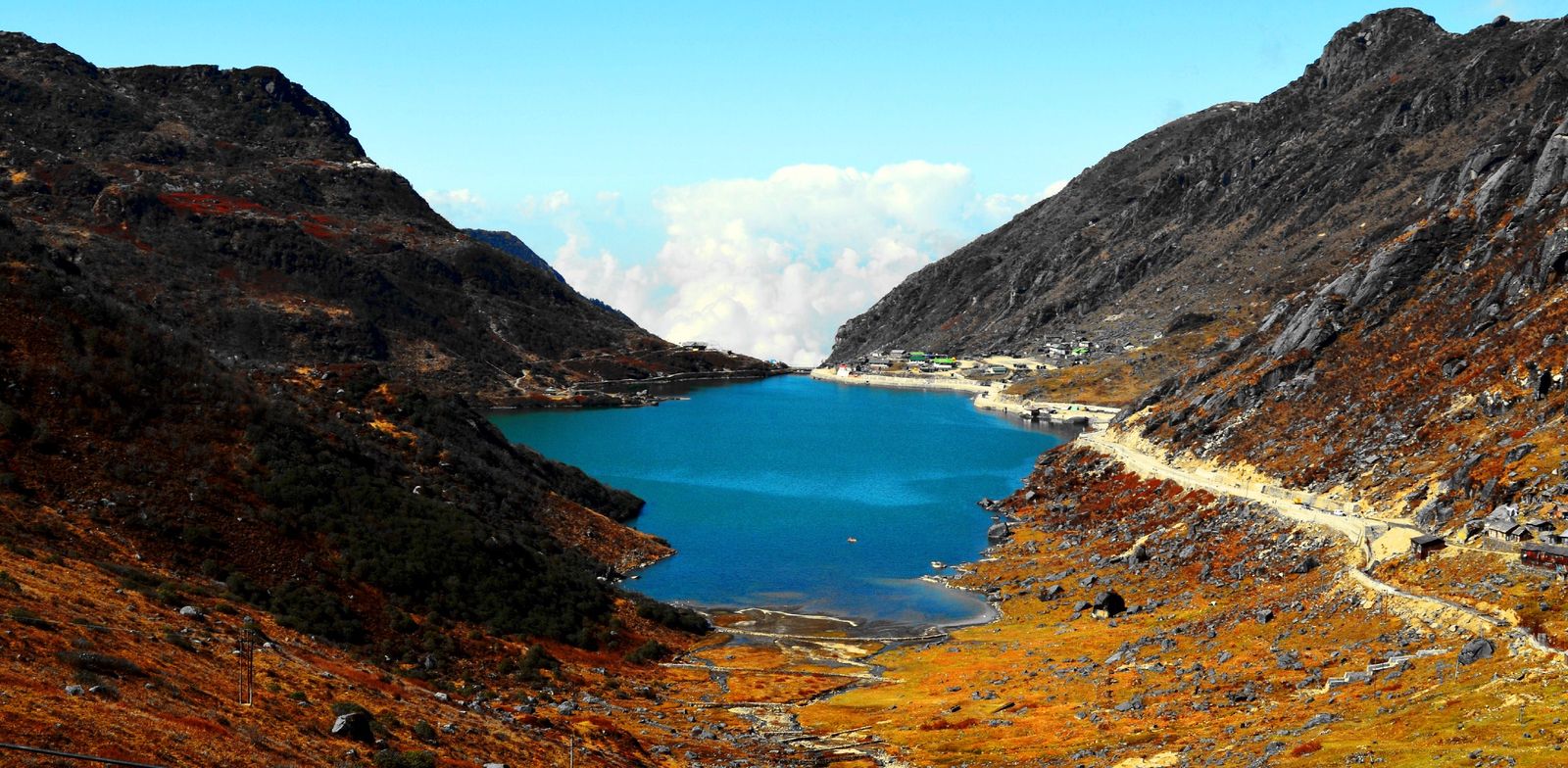
Ask a doctor first for anyone who is pregnant or has a heart, lung or blood-pressure condition, because the lake sits at 3,753 m and the road gains roughly 2,100 m over 40 km in a single morning. Children of five and under are not issued the permit, so the youngest stay in Gangtok at 1,650 m with someone they know, which is also the answer for any adult who would rather not go. If the doctor agrees, we never drive up on the first morning after arrival, we keep the stop at the lake under an hour, we carry oxygen, and we turn back at the first headache.
Sources we checked for this page (30)
- PAP and RAP for foreign nationals applied for on e-FRRO and issued electronically only, with approvals at least 30 days ahead
- Sikkim RAP online only through e-FRRO from January 2026; covers Pelling, Pemayangtse and Yuksom; needed by foreign nationals and OCI cardholders
- Nathu La open to Indian citizens only, with permits obtained in advance in Gangtok
- Sikkim ₹50 tourist fee from 14 March 2025 for tourists aged five and over, collected at the accommodation
- Indian nationals entering Bhutan: original passport or voter ID, birth certificate in English or passport for under-18s, SDF ₹1,200, children 5 and under exempt and 6 to 12 half, travel insurance, guide mandatory
- SDF US$100 a night for dollar-paying tourists from 1 September 2023 to 31 August 2027; guide engagement at land ports notice, September 2026; Taktsang ponies to be pre-booked
- Bhutan visa US$40, applied online, reviewed within five working days
- Drukair KB131 Bagdogra to Paro on Tuesdays and Saturdays in October 2026
- Indians flying between India and Nepal: only a passport or original voter ID; Aadhaar, PAN and driving licences not accepted
- Nepal tourist visa US$30 for 15 days, US$50 for 30, US$125 for 90
- Visa on arrival available at Kakarbhitta
- Bhadrapur to Kathmandu about 45 minutes on Buddha Air
- Kakarbhitta 21.5 km from Bagdogra airport and 21 km from Bhadrapur airport
- TCS on overseas tour programme packages cut to a flat 2 percent from 1 April 2026 in the Union Budget 2026-27, replacing 5 and 20 percent
- Union Budget 2026-27 tourism note on the TCS change
- NH10 blocked by landslides at Sevoke on 27 June 2026, traffic diverted via Gorubathan
- Official routes from Siliguri to Darjeeling via Tindharia and Kurseong, Rohini and Pankhabari
- Darjeeling January mean minimum 1.7 °C (IMD 1991 to 2020)
- Kalimpong January mean minimum 6.8 °C (IMD 1991 to 2020)
- Thimphu climate normals, January lows about minus 2 °C
- Glenburn: no plucking December to early February; winter nights not below 7 °C by the estate's account
- Black-necked cranes arrive in Phobjikha in late October and leave in mid February
- Tsomgo Lake at 3,753 m, 40 km from Gangtok
- Haat Bazaar on Wednesdays and Saturdays
- Drukair December 2026: KB131 Bagdogra to Paro Tuesdays and Saturdays; KB130 Paro to Bagdogra 16:20 Mondays and Fridays
- Drukair January 2027: KB130 Paro to Bagdogra 16:20 Mondays and Fridays
- Drukair April to 14 May 2027: Paro to Bagdogra 11:50 Mondays and Fridays; Bagdogra to Paro Tuesdays and Saturdays
- Tiger Hill vehicle tokens issued to drivers the day before: 550 a day at Darjeeling Sadar, 08:00 to 20:00, in force since 15 September 2019; Tiger Hill 2,590 m, 11 km from Darjeeling
- Darjeeling Himalayan Railway joy ride seats bookable on IRCTC up to 60 days ahead
- Indian Railways advance reservation period cut to 60 days from 1 November 2024, which governs the joy ride seats
Checked September 2026. We confirm every rule, fee and flight again for your dates.
Plan my journey
Ask the question we have not answered here
Send it with your dates, and we check the rules that move most, such as permits, fees and flight days, against the exact days you want to travel.