Health, kit and customs
What to sort out before you fly
Altitude and insurance, what to pack for your month, which cards and SIMs work in India, Bhutan and Nepal, how we plan for children, grandparents and diets, and what to tip.
In short
What should I know before travelling to Darjeeling, Sikkim, Bhutan or Nepal?
Almost every night on our journeys is spent below 2,400 m, so altitude matters mainly on day trips such as Tsomgo and Nathu La and on a few high nights at Lachung, Zuluk, Phobjikha, Sandakphu and the Goecha La camps. Carry insurance that covers evacuation from the mountains, pack layers for cold dawns, and bring cash for monasteries and villages. Indian SIMs work in the hill towns but roam poorly in Bhutan and Nepal. Tell us about children, grandparents, health and diet before we plan.
Altitude
Where you sleep, and where you only visit
Height in these hills is mostly a day-trip question. Here is every altitude our journeys touch, grouped by how long you spend there.
-
Most nights: below 2,400 m
Tea-estate houses sit between about 985 m at Glenburn and around 1,400 m at Taj Chia Kutir inside Makaibari, below Kurseong at about 1,483 m. Then Kalimpong at 1,247 m, Gangtok 1,650 m, Darjeeling 2,045 m, Pelling 2,150 m, Paro about 2,200 m and Thimphu 2,320 m. Most guests notice only a shorter breath on stairs, and the cold of the nights.
-
Dawn points above town: up to 2,590 m
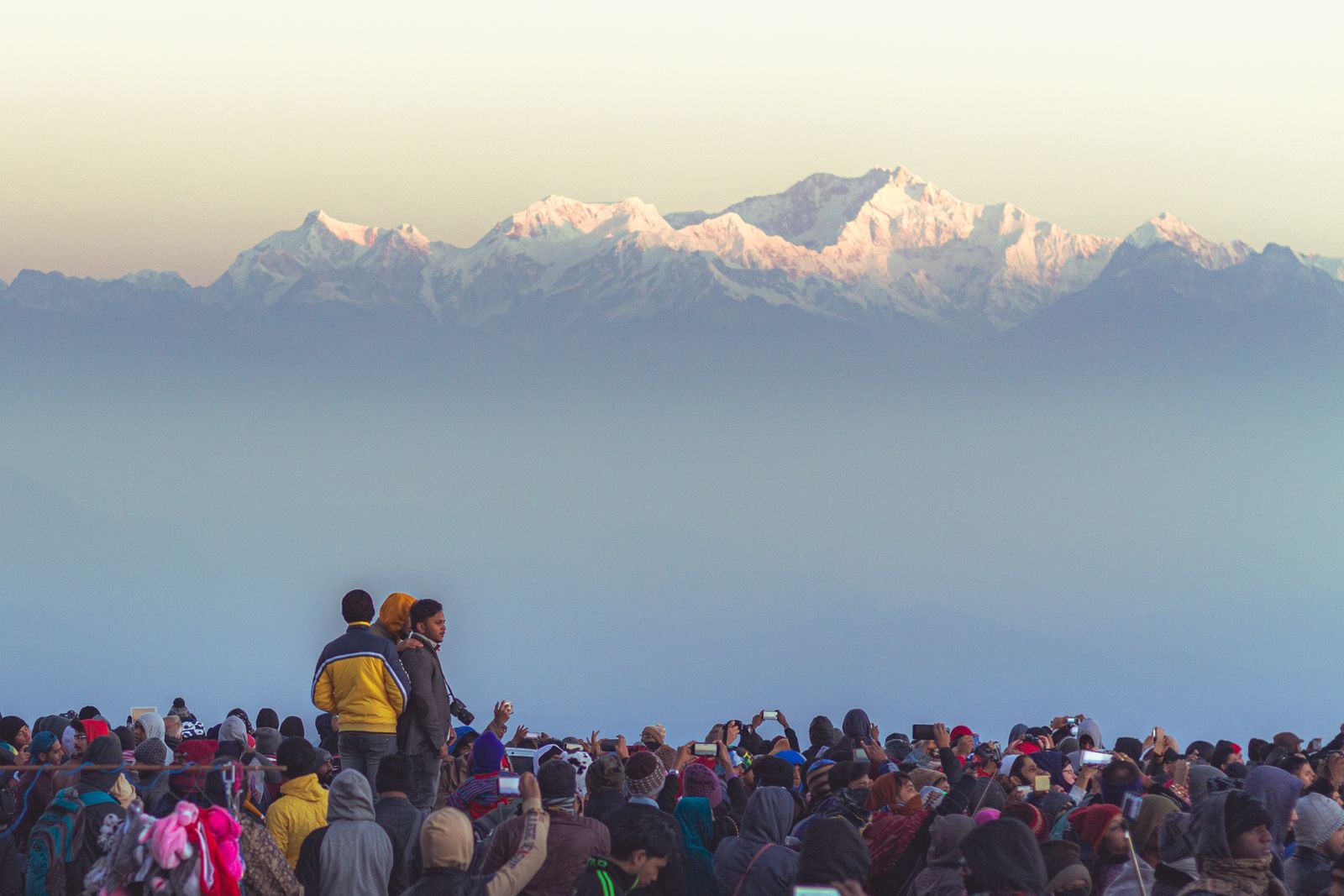
Ghum station at 2,258 m and Tiger Hill at 2,590 m are short visits from Darjeeling. The chill before sunrise catches people out far more than the height, so pack the down jacket before anything else.
-
Tsomgo and Nathu La: 3,753 and 4,310 m
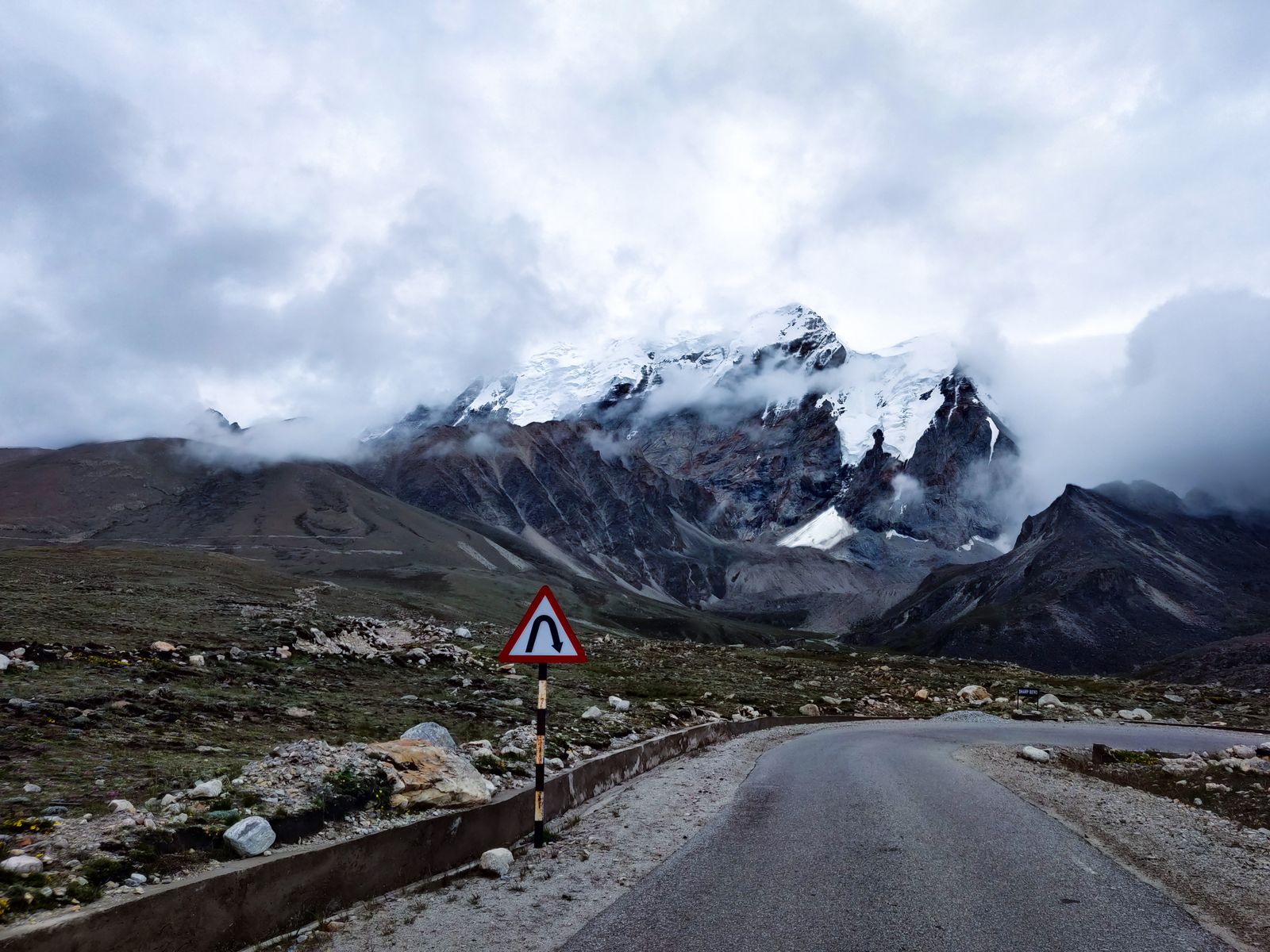
The road from Gangtok climbs about 2,100 m in 40 km to the lake, with the pass beyond it. Both are day trips, never on the day you land, and we turn round at the lake if anyone feels unwell.
-
North Sikkim and Zuluk
Lachung sleeps at about 2,650 m with Yumthang at 3,564 m by day; Zuluk sleeps at about 2,800 m and crosses about 4,100 m. Both follow lower nights, and on the Zuluk road your guide carries an oximeter.
-
Bhutan's passes, Taktsang and Phobjikha
Dochu La at 3,100 m, Taktsang at 3,120 m and Chele La at 3,988 m are visited by day. The Phobjikha valley, near 3,000 m, is the highest place our Bhutan journeys sleep, and it always comes after lower nights.
-
Ridge and trek nights
Sandakphu, 3,636 m, follows a night at 2,970 m. The Goecha La trek spends two nights at Dzongri, about 4,000 m, and one at Lamuney, about 4,150 m, before the dawn walk to View Point 1, about 4,600 m. Both carry oximeter checks morning and evening.
-
Everest by plane or helicopter
The Everest Experience flight shows the range from a pressurised cabin in about an hour, so height never comes into it, even when the crew call you forward to the cockpit. The helicopter breakfast is the other case: Hotel Everest View stands at 3,880 m and you arrive with no time to adjust, so ask your doctor before we book it.
Our rules
How our itineraries handle height
All 41 of our published journeys are built on these patterns, and a plan made for you starts from the same ones. They are why the high days feel unhurried.
- No bed above 3,000 m in the first two nightsEvery journey starts low. On more than three quarters of them you never sleep above 2,320 m at all.
- High lakes and passes are day visitsTsomgo, Nathu La, Chele La and Taktsang are reached and left the same day, never on the day you land, and you sleep lower again that night.
- Lower nights before the highest onesSandakphu, Zuluk, Lachung and the trek camps all follow lower nights, each itinerary sets out its altitude advice in writing, and the Goecha La trek holds a second night at Dzongri before going higher.
- Oxygen, water and blankets in the carOn the Tsomgo, North Sikkim and Zuluk days the car carries oxygen, drinking water and blankets. Trek parties carry bottled oxygen and a full first-aid kit.
- Readings twice a day on the ridge and trailOn the Singalila Ridge and the Goecha La trek, your guide checks oxygen saturation morning and evening; on the ridge the readings go into a log you take home.
- Turning back is part of the planA headache at Tsomgo means we stop at the lake rather than climb on to Nathu La. On a trail, your guide decides with you whether to rest, wait or descend.
- Short stops at the topTime at the high lakes stays under an hour. Walk at half pace, keep a warm layer on, and leave before the afternoon cold.
- A quiet evening before a high dayWe suggest plenty of water, an early night and no alcohol before Tsomgo, and none on the first night at Lachung, Zuluk or Gangtey.
- Some guests should ask a doctor firstAnyone with a heart, lung or blood-pressure condition, or who is pregnant, should take medical advice about days above 3,000 m before we build them in.
- Preventive medicine is your doctor's callAsk your own doctor about acetazolamide or anything similar before a trek, a ridge night or the helicopter breakfast, and bring it with you.
Insurance and medicines
The cover to buy, and the medicines to bring
Our booking terms ask every guest to hold travel insurance that covers cancellation, medical care and evacuation in the mountains, and Bhutan's rules expect visitors to be insured too. Read the altitude limit in the small print, because a standard policy often stops at 3,000 m: Lachung and Yumthang need cover to about 3,800 m, the Singalila Ridge to 4,000 m, Nathu La and the Old Silk Route to about 4,500 m and the Goecha La trek to 5,000 m. Check that a helicopter flight is covered if your plan has one. For treks we need the policy number before we confirm the crew, because the crew is booked in your name.
Bring the whole journey's supply of any prescription medicine and a few days more, split between two bags, with the prescriptions themselves in case a pharmacy or an airport asks. Pharmacies in the hill towns are modest and close early, and a brand you use at home may not be stocked at all: Darjeeling, Kalimpong and Gangtok are the reliable places to buy anything, and Yuksom, Zuluk and Lachung are not.
Every road here is a chain of hairpins, and the bends begin about an hour out of Bagdogra, at Sevoke. Ask your doctor about a travel-sickness remedy and take it before the drive rather than halfway through, keep breakfast light on a long road day, and sit in front if the bends bother you. Use repellent at dusk in the Dooars forests, where the parks and tea gardens are lowest and warmest.
Food, water and doctors
Food, water, jabs and hospitals
The questions guests ask us most often before a first journey here, answered with the places we actually use. None of it is medical advice: your own doctor decides what you take.
- Never the tap, anywhere on these routesTap water is not for drinking in any of the three countries, and that includes cleaning your teeth where the plumbing is old. Refillable bottles travel in the car and every house we use puts drinking water in the room, so you should not need to buy a plastic bottle all journey. Skip ice in small roadside places and drink the tea, which arrives boiled.
- Where we let you eat in the first daysFor the first two or three days we keep meals to hotel kitchens, estate bungalows and the family kitchens we brief in writing before you land. After that, street food is part of the point: momos and thukpa from a busy counter, sel roti hot from the pan, chhurpi from a market stall. The rule is simple, and it is your driver's rule too: eat where it is cooked in front of you and the queue keeps moving.
- Stops about every two hoursLong drives are broken roughly every two hours at places your driver knows for their washrooms as much as their food: the water's edge above Melli, Teesta Bazaar on the way to the border, a Kurseong tea shop with momo steamers going, Sinclairs at Chalsa in the Dooars, and the Dantak canteen at Takthi on the climb to Thimphu. Tell your driver if you would rather stop more often; nobody minds.
- Jabs: four to six weeks before you flyAsk your GP or a travel clinic about vaccinations and malaria at least four to six weeks ahead, which is the window the UK's NaTHNaC advises, and read its country pages for India, Bhutan and Nepal. The only certificate India itself asks for is yellow fever, and only from travellers arriving within six days of leaving a country with a risk of transmission, which none of our routes involves.
- The hospitals below the hillsFor the Darjeeling hills the larger hospitals are in Siliguri, about an hour and a half below Kurseong and three hours from Kalimpong: North Bengal Medical College and Hospital at Sushrutanagar is the region's government referral hospital, and Neotia Getwel Multispecialty Hospital at Uttorayon in Matigara, on the Bagdogra side of the town, is the private one.
- In Sikkim, Bhutan and NepalIn Gangtok, the Central Referral Hospital at 5th Mile, Tadong and the government STNM Hospital at Sochakgang. In Bhutan, the Jigme Dorji Wangchuck National Referral Hospital in Thimphu, the one hospital in the country with the full range of specialties, and a district hospital at Paro. Near Kathmandu, Dhulikhel Hospital. On Three Generations we also brief a doctor in Kurseong and Kalimpong before you arrive.
Packing
What to pack, season by season
Temperatures are average night lows and day highs. Dress in layers you can peel off by mid-morning, because a hill day can run from frost to warm sun.
| Months | What the hills feel like | Pack | Add for high or early days |
|---|---|---|---|
| October and November | Darjeeling 6 to 19 °C, Gangtok 10 to 20 °C; dry, clear and crisp | Layers, a fleece, a light down jacket, shoes with grip, sunglasses | Hat, gloves and a warm jacket for Tiger Hill or Tsomgo before dawn |
| December to February | Darjeeling 2 to 14 °C, Thimphu down to -2 °C; bright days, frosty dawns | Thermals, a proper down jacket, woollen hat, gloves, thick socks, slippers | Insulated boots and hand warmers for Phobjikha, Tsomgo and Sandakphu |
| March to May | Darjeeling 6 to 19 °C, Kalimpong up to 25 °C; haze, afternoon showers | Light layers, a fleece, a packable rain shell, walking shoes | A warm layer for Barsey, Chele La and the Pelling dawns |
| June to September | Darjeeling 13 to 20 °C, Kathmandu up to 30 °C; rain on most days | Rain jacket, quick-dry clothes, a spare pair of shoes, a small umbrella | Leech socks for forest trails; high roads often close, so plans stay low |
| Temples and dzongs, any month | Shoulders and knees covered; hats off in Bhutan's dzongs | Long sleeves, trousers or a long skirt, slip-on shoes, thick socks | One smart outfit for a festival or a ceremony |
| Treks and ridge nights | Sandakphu around freezing in autumn; Goecha La camps well below | Broken-in boots, down jacket, thermals, head torch, large power bank | Liner and poles; we lend both on the Singalila Ridge |
Money and signal
Cards, cash and SIMs in three countries
Bhutan's clocks run 30 minutes ahead of India's, and Nepal's 15 minutes ahead. Every time we give you inside either country is local time.
| Where | Money | Phones and signal |
|---|---|---|
| Darjeeling, Kalimpong, Gangtok | Cards at hotels, UPI at most shops, ATMs in every town | Jio and Airtel work in town; gaps in the Teesta and Rangeet gorges |
| Pelling, Yuksom, the Tsomgo road | Cards at the bigger houses only; cash for offerings, tea and stalls | Fair on the Pelling ridge, patchy towards Yuksom and up to Tsomgo |
| North Sikkim, Zuluk, Sandakphu | No ATM to count on north of Mangan or at Zuluk; cash only on the ridge | Weak north of Mangan; only BSNL at Zuluk; phones may jump to Nepal networks |
| Foreign visitors in India | Cards at hotels and larger shops; carry rupee notes for tips and stalls | Buy an Indian SIM with your passport and visa, or a travel eSIM before you fly |
| Bhutan | Ngultrum at par with the rupee; rupees accepted; cards at the lodges | Indian SIMs roam poorly; buy B-Mobile or TashiCell at Paro or Phuentsholing |
| Nepal | 1.6 Nepali rupees to ₹1; ₹200 and 500 notes to ₹25,000; no ₹2,000 | Indian SIMs need a roaming pack; a Nepali SIM at Kathmandu airport; UPI at Fonepay QR |
Your party
Children, grandparents, diets and steps
Tell us who is coming and what each person finds hard. It changes the rooms we ask for, the order of the days and the lunch stops.

-
Children
Tell us the ages and we plan around them. Tsomgo and the North Sikkim permits are issued only for children over five, so a younger child spends that morning in Gangtok with one parent. Hill cars carry no seats for small children: say so before you fly and we source a booster in Siliguri and fit it before you set off, with a cool box of water and fruit in the door. The bends start an hour out of the airport, so ask your paediatrician about travel sickness, keep breakfast light and give the front seat to whoever feels it. On the steam joy ride the front seats go first, and they are the ones to ask for: from there children watch the two sandmen throw sand on the rails when the wheels slip. Signal dies in the Teesta and Rangeet gorges, so download what they want to watch the night before. Bhutan charges no Sustainable Development Fee under six, and half from six until the twelfth birthday. December nights near 3.5 °C in Darjeeling mean thermals, gloves and a woollen cap each.
-
Grandparents
We sleep the party lower and let Darjeeling be a day out. Three Generations keeps every bed below 1,500 m, four nights inside Makaibari below Kurseong and three in Kalimpong at 1,247 m, which is some 800 m below Darjeeling and a good deal kinder at night. We ask each house for rooms on one floor near the lift, ask your airline for wheelchair assistance when you book and confirm it the day before, so the staff meet the car at the kerb, and a folding wheelchair rides in the boot. On a journey for six the second car carries the luggage, so nobody lifts a case. In Darjeeling the car stops at the point on the Mall road closest to Chowrasta and the square itself is flat, with benches at Batasia for anyone who would rather sit out the walk. A local doctor is briefed in each town before you arrive, and the hospitals below the hills are named above. Bring two weeks of medicines split across two bags.
-
Vegetarian and Jain
Much Sikkimese food is vegetarian by nature, from gundruk to kinema. Jain cooking without onion, garlic or root vegetables is requested in writing. A Newar samay baji in Nepal comes with buffalo, egg and fish, so we ask ahead for a vegetarian plate.
No chilli, allergies, no alcohol
In Bhutan chilli is the dish itself; ema mey nang asks for none. Allergies, spice levels and alcohol-free meals go to each kitchen in writing before you land, so you never have to explain at the table.
-
Steps, slopes and mobility
Darjeeling's Mall climbs from every drop-off, monasteries sit up long flights and some heritage cottages lie down steep paths. Tell us how many steps each person manages, and we choose rooms, visits and a Taktsang pony to match.
Pregnancy and medical conditions
Most guests manage the hill towns well; the high days are the real question. With a heart, lung or blood-pressure condition, or in pregnancy, ask a doctor about Tsomgo, Nathu La and any helicopter flight before we include them.
Etiquette
Monasteries, dzongs and cameras
Monks, families and soldiers are generous with visitors who follow a few simple customs. Your guide will remind you, but it helps to know them first.
- Walk clockwiseAround stupas, prayer wheels, chortens and monastery halls, keep the building on your right as you go.
- Shoes off where others take theirs offAt hall doors, in temples and in family puja rooms. Slip-on shoes save time, and thick socks save you from cold stone.
- Cover shoulders and kneesIn every monastery, temple and dzong. Bhutan's dzongs also ask for long sleeves, and for hats off inside the courtyards.
- Ask before you raise a cameraMany prayer halls allow no photographs at all, the Namgyal Institute museum among them, and monks at prayer deserve the question first.
- Taktsang goes phone-freePhones, cameras and bags stay in lockers at the monastery, so take your pictures from the viewpoint across the gorge.
- Never photograph the ArmyCamps, convoys and soldiers on the Nathu La, Zuluk and North Sikkim roads are strictly off limits. Your guide will tell you when to lower the camera.
- Leave the drone at homeBhutan does not let visitors fly drones, and customs at Paro holds any that arrive. India treats border belts and army areas as red zones, which covers much of Sikkim.
- Give with the right handOffer money, a khada or a gift with the right hand, or with both. Never point at a sacred image, or a person, with one finger.
- Festival grounds and dancesAt a tshechu, never cross the dance ground, keep the flash off, and sit where your guide settles you before the first dance.
- Tihar week in the hillsStep around rangoli, never on it, ask before photographing a puja or a tika, and keep leather out of family shrine rooms.

Tipping
What to tip, and when
Tipping is always your choice, and no tip appears in your quote. These are the ranges we suggest when guests ask us for a figure.
| Who | A sensible range | How and when |
|---|---|---|
| Your driver, in India | ₹500 to 800 a day | One envelope at the end of the journey |
| A local guide, in India | About ₹500 a half day | At the end of their days with you |
| Tea estate or hotel staff | Whatever feels right | One envelope for the whole staff at checkout |
| Your guide, in Bhutan | US$8 to 10 per guest a day, for one or two guests | In an envelope on the last day |
| Your driver, in Bhutan | US$5 to 7 per guest a day, for one or two guests | At the same moment, often at the airport on the way out |
| Guides and drivers, in Nepal | Amounts suggested in your final papers | At the end of each section of the journey |
| A trek crew | A guideline for your crew size, given at booking | Once, together, on the last evening in Yuksom |
| Safari driver and forest guide | Your choice | After each run in the Dooars parks |
Questions
Before you travel, answered straight
How high will we actually sleep, and when does the height start to matter?
On most journeys, never above 2,320 m. Darjeeling is 2,045 m and Gangtok 1,650 m, where altitude sickness is rare and most people notice only a shorter breath on the stairs. Height starts to matter on the day trips, Tsomgo at 3,753 m and Nathu La at 4,310 m, and on the few high nights at Lachung, Zuluk, Phobjikha, Sandakphu and the trek camps. Those always follow lower nights and never the day you land; how each high day is built, and when we turn back, is set out in the altitude rules above.
What do we pack for a December dawn at Tiger Hill?
Pack for nights near 4 °C and days around 14 °C, and colder still before dawn at Tiger Hill: thermals, a proper down jacket, a woollen hat, gloves, thick socks and slippers for cold floors. Days are bright and dry, so bring sunglasses and sun cream too. Many older houses have no central heating, so we ask each house about heaters, fires and extra quilts for your room before you arrive.
Do we need travel insurance for Sikkim, Bhutan or Nepal?
Yes. Our booking terms ask every guest to hold cover for cancellation, medical care and evacuation in the mountains, and Bhutan expects its visitors to be insured. The number that matters is the altitude limit: a standard policy often stops at 3,000 m, which is below several of our days, so buy to the highest point on your own itinerary, listed above, and ask your insurer in writing about a helicopter flight. We need the policy number before a trek crew is confirmed.
Will our mobile phones work in Sikkim, Bhutan and Nepal?
In the towns, yes; on the high roads and in the gorges, not reliably, and the table above says which network reaches where. Buy a local SIM in each country rather than roaming, because an Indian number roams poorly and expensively in Bhutan and Nepal. Tell whoever is at home that a day at Tsomgo, on the Zuluk road or on the Singalila Ridge can pass with no signal at all, and that your messages will arrive in a burst when the car drops back into a valley.
Can we pay by card or UPI in the hills?
In the towns, yes, and the table above says where. What a table cannot tell you is how much cash to keep in your pocket: enough for offerings at a shrine, a khada at a gompa door, a stall at the haat, a porter and the tips you choose to give. Draw it in Darjeeling, Kalimpong or Gangtok, because the machines at Kurseong, Ravangla, Yuksom and Zuluk can be empty when you reach them.
How do you plan for grandparents who find steps hard?
By deciding the rooms and the route before you arrive, not on the day. One outing a morning, a long lunch after it and a free afternoon do more for a slow walker than any lift. We ask each house for a room near the lift or on one floor, choose monasteries and viewpoints the car can reach close to the door, and say plainly which places cannot be softened: Taktsang is the clearest, where a pony carries riders only as far as the halfway cafeteria and the walk on to the monastery gate is on foot.
How much should we tip our driver and guide?
It is your choice and never expected on the day. In India we suggest ₹500 to 800 a day for a driver and about ₹500 a half day for a guide. In Bhutan, a common rule of thumb for one or two guests is US$8 to 10 per guest a day for the guide and US$5 to 7 for the driver. Most guests hand over an envelope on the last day.
Do we need jabs for India, Bhutan and Nepal, and what about the water?
Ask your GP or a travel clinic four to six weeks before you fly, and read the country pages named above. We give no medical advice and your own doctor decides what you need. No certificate is asked for on any of our routes, unless you arrive within six days of leaving a country with a risk of yellow fever. Treat the tap as undrinkable in all three countries: refills travel in the car, every house puts drinking water in your room, and the tea arrives boiled.
Sources we checked for this page (41)
- Darjeeling at 2,045 m; IMD 1991 to 2020 normals: December mean minimum 3.5 °C, January 1.7 °C; monthly lows and highs used in the packing table
- Kalimpong at 1,247 m; climate normals 1991 to 2020
- Gangtok at 1,650 m; climate normals 1991 to 2020
- Tsomgo Lake at 3,753 m, 40 km from Gangtok, frozen in winter
- Tsomgo permits issued only for children above five; photo ID and two photographs; Aadhaar not accepted since September 2019
- Thimphu at 2,320 m; January mean low about -2 °C (climate normals 1996 to 2017)
- Dochu La at 3,100 m
- Taktsang at 3,120 m
- Taktsang: bags, cameras and phones left in lockers at the monastery
- Hotel Everest View at 3,880 m in Sagarmatha National Park
- Everest Experience flight: about one hour from about 06:15, a window seat for every passenger
- Bhutan (Indian consulate, updated 17 September 2026): tourists should have travel insurance for the trip; SDF exempt for children five and under, half from 6 to 12
- Bhutan: SDF rules for children; dress covering shoulders to knees at religious sites; SIMs available at Paro airport; Indian rupees accepted
- Tourist SIM packages from B-Mobile and TashiCell at Paro International Airport
- Visitors may not fly drones in Bhutan; a drone brought in is declared at Paro customs and held until departure
- Bhutan tipping rule of thumb for one or two guests: guide US$8 to 10 and driver US$5 to 7 per person per day
- Indian ₹200 and ₹500 notes accepted in Nepal up to ₹25,000; ₹2,000 notes still prohibited (NRB notice 24 July 2026)
- Indian travellers pay by UPI at Fonepay QR merchants in Nepal
- Zuluk: only BSNL intermittently, no ATMs, cash only (updated 26 August 2026)
- Sikkimese meals of rice, dal, curry and achar; gundruk, sinki, kinema; largely vegetarian dishes
- Namgyal Institute museum: no shoes, no photographs or video
- Sleeping heights across all 41 journeys: tea estates from about 900 to 985 m; 34 journeys never sleep above 2,320 m; highest nights Phobjikha about 2,900 to 3,000 m, Lachung about 2,650 m, Zuluk about 2,800 m, Tumling 2,970 m, Sandakphu 3,636 m, Dzongri about 4,000 m and Lamuney about 4,150 m; no journey sleeps above 3,000 m in its first two nights
- Goecha La: two nights at Dzongri, then Lamuney about 4,150 m, View Point 1 about 4,600 m; oximeter checks morning and evening; bottled oxygen and full first-aid kit; insurance to 5,000 m, policy number needed before the crew is confirmed
- Singalila: Tumling 2,970 m then two nights at Sandakphu 3,636 m; oxygen saturation checks morning and evening with a log handed over; poles, liners and hot-water bottles on loan; insurance to 4,000 m
- Sikkim End to End: oxygen canister, blankets and water on the Tsomgo and northern days; Lachung about 2,650 m; insurance to 3,800 m; no ATM to count on north of Mangan
- Old Silk Route: Zuluk about 2,800 m, crest about 4,100 m; pulse oximeter and oxygen in the car; insurance to about 4,500 m; only BSNL, no ATM
- Christmas in the Hills: drivers usually receive ₹500 to 800 a day and guides about ₹500 a half day
- Hill cars carry no car seats; a booster sourced in Siliguri on request
- Samay baji includes buffalo meat, egg and fish; a vegetarian version is something we ask for
- India's drone airspace map: red zones, where drones fly only with central government permission (24 September 2021)
- Taj Chia Kutir stands among Makaibari's sections at around 1,400 m; Kurseong at 1,483 m; Three Generations keeps every bed below 1,500 m, four nights at Chia Kutir and three at the MAYFAIR in Kalimpong; rooms asked for on one floor near the lift; airline wheelchair assistance requested at booking and confirmed the day before; the second car carries the luggage; a local doctor briefed in Kurseong and Kalimpong; cars stop at the point on the Mall road closest to Chowrasta, with benches at Batasia
- Glenburn at about 985 m; the bends begin at Sevoke about an hour out of Bagdogra; booster seats are not standard in hill cars and are sourced in Siliguri on request, with a cool box of water and fruit in the car; first-class steam joy ride seats booked on IRCTC the morning they open, 60 days ahead, with the two sandmen riding at the front
- Stops used on long drives: the water's edge above Melli at about 08:00 and a second near Sevoke, Teesta Bazaar on the Bhutan border day, Sinclairs Retreat Dooars at Chalsa, and the Project Dantak canteen at Takthi on the Phuentsholing to Thimphu climb
- NaTHNaC (TravelHealthPro): travellers should ideally arrange an appointment with a health professional at least four to six weeks before travel; country pages for India, Bhutan and Nepal; India requires a yellow fever certificate only from travellers aged 9 months and over arriving within six days of leaving an area with a risk of transmission (checked 20 September 2026)
- North Bengal Medical College and Hospital, Sushrutanagar, Siliguri: the region's government tertiary referral hospital, established 1968 (checked 20 September 2026)
- Neotia Getwel Multispecialty Hospital, Siliguri: a NABH accredited private multispecialty hospital (checked 20 September 2026)
- Central Referral Hospital, 5th Mile, Tadong, Gangtok: NABH accredited multi-specialty hospital of Sikkim Manipal University with 24x7 emergency (checked 20 September 2026)
- Sir Thutob Namgyal Memorial (STNM) Hospital, Sochakgang, Gangtok: Sikkim's government referral hospital (checked 20 September 2026)
- Jigme Dorji Wangchuck National Referral Hospital, Thimphu: Bhutan's national referral hospital, the only one in the country offering the full range of medical and surgical specialties (checked 20 September 2026)
- Paro district hospital: opened 1980, expanded to 40 beds in 2003, expansion planned under the current five-year plan (BBS, checked 20 September 2026)
- Dhulikhel Hospital, a university hospital at Dhulikhel, 1,550 m, near Kathmandu
Checked September 2026. We confirm every rule, fee and flight again for your dates.
Plan my journey
Tell us what each person in your party finds hard
Send the ages travelling, any condition, medicine or diet that matters and how many steps each person manages, and the plan is built around them from the first night rather than adjusted later.