In short
There is no logo in our footer and no carbon figure on this page, because we have not measured one. Six things happen on every journey instead: money paid to people who live where they work, two or three nights in a place, refills rather than plastic bottles, estates and monasteries paid their own rate, no elephant rides at Jaldapara, and cranes watched from a distance in Phobjikha with no drones.
Why this page is a list
We would rather be judged on six things we do
There is no certificate on this page. A badge is bought once, sits in a footer for years and tells you nothing about the week you are about to pay for. We would rather hand you six things we do on every journey, all of them visible while you are here, and be judged on whether they happen.
Four of them hold on every journey we sell. The last two apply wherever there are wild animals, which in this region is more often than people expect. None of them depends on us, which is the point: you can check each one on the day, and tell us if it fails.
The list
Six practices, kept on every journey
Each one has a journey beside it where it is easiest to see.
-
Money that stays where you spend it
The drivers, guides and cooks on your journey live where they work, from the Darjeeling hills to Paro and Kathmandu, so their fee stays in their valley instead of going to a booking platform in another country. It is also why a supper in a family kitchen is a real evening on a journey and not a photograph opportunity.
-
Two or three nights in a place
Our rule is two or three nights per place, broken only for a border or a night on a trail. That means fewer check outs, less fuel burned on transfer days, and enough time to walk the same lane twice and be recognised the second time.
-
Refills, not plastic bottles
Refillable water rides in every car and we hand out no single use plastic bottles. On a trail it matters more, because there is no collection above the road head: whatever a picnic or a camp leaves comes back down the hill with us.
-
Estates and gompas paid their own rate
A factory morning, a tasting or time inside a monastery is paid to the estate or the gompa at the rate it sets, and it appears as its own line in your quote. Nothing is slipped to a gatekeeper as a tip, which is how access quietly becomes a private toll.
-
No elephant rides
The forest department at Jaldapara still offers elephant rides and we do not book them, for guests or for ourselves. You go into the park in an open jeep with a forest guide, on the park's own routes and time slots, which is also the better way to see a rhino.
-
Cranes at a respectful distance
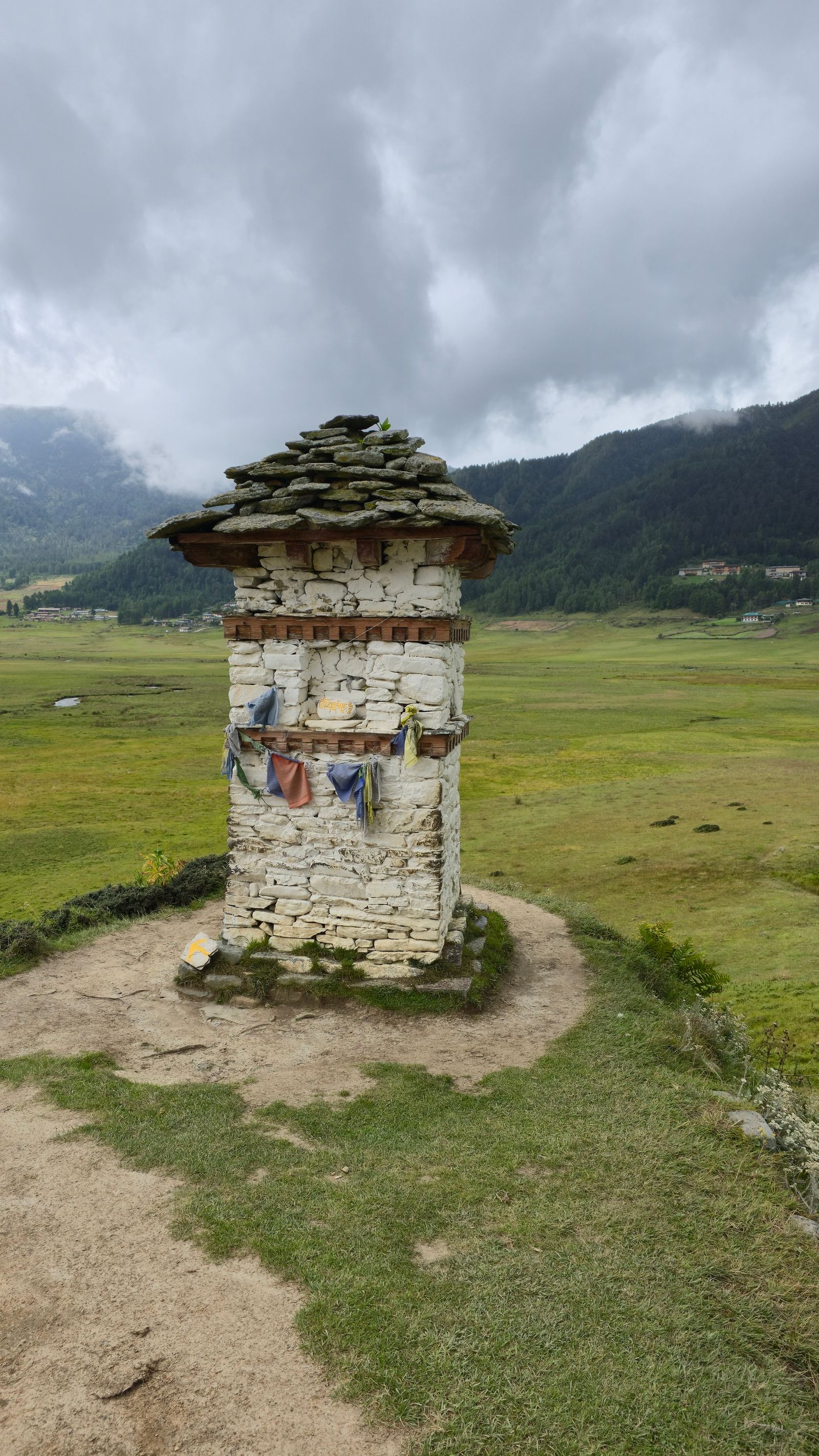
In Phobjikha we watch the black necked cranes from behind the fences and along the paths, voices low and flash off, with a scope set up before sunrise so nobody needs to walk closer. We fly no drones over the valley and we ask you not to either.
The limits
What we do not claim
We publish no carbon figure, because we have not measured one, and a number nobody can show the working for is worth less than nothing on a page like this. We give no percentage of anything to anything. We name no partnership and no scheme. If any of that changes, it will appear here with the working attached.
What we can say is narrow and true. Shorter journeys with fewer moves burn less fuel than the ten town tour, and we design them that way for the guest's sake as much as the hill's. Paying people directly at their own rate is better for them than paying a platform. Watching an animal from a distance is better for the animal. None of that is a claim about the planet. It is a claim about six things that happen on your days.
Bhutan asks every visitor for a Sustainable Development Fee, which goes to the country and not to us. What it comes to for the nights on your plan is set out on the costs page.
Your part
Hold us to it
Before you travel, ask your designer which of the six apply to your days and where. Two of them will be visible on the first afternoon, in the car and at the first house.
If one of them fails while you are out here, ring the number in the footer and say so. A practice nobody checks is a sentence on a website, and this page is meant to be the opposite of that.