Boudhanath stupa at dusk in Kathmandu, its white dome, gilded tower and prayer flags seen from a rooftop under a pink sky

Grand journey · 14 nights

Three Kingdoms

Kathmandu to the Tiger's Nest by way of Darjeeling and Gangtok: three old kingdoms, three borders, one team.

  • 14nights, private
  • 6bases
  • 3,988 mhighest point
  • ₹5,70,000from, per person, twin share

In short

Is Three Kingdoms right for you?

Three Kingdoms is a fourteen-night private journey from Kathmandu to Paro through Nepal, the Darjeeling hills, Sikkim and Bhutan. You spend three nights in Kathmandu, take the 45-minute hop to Bhadrapur and walk the Mechi bridge into India, stay three nights in Darjeeling and two in Gangtok, then drive through the Bhutan Gate at Phuentsholing to Thimphu and Paro.

Made fortravellers with two weeks for one great journey, couples who like history with their mountains, families with children over twelve and returning guests who know Darjeeling and want the wider region.

Not for you ifyou are short of time or would rather not spend seven hours on one road day, choose Two Himalayan Capitals, which flies from Kathmandu straight to Paro.

Nepal's monarchy ended in 2008. Sikkim's Chogyals ruled from Gangtok until 1975, and the Darjeeling ridge was Sikkim's until 1835. Bhutan still has its king. Between Kathmandu and Paro lie three Himalayan kingdoms, two that ended within living memory and one that never did, joined by old trade roads and by Nepali, a language you will hear in all three.

The borders you cross were drawn by their wars and treaties, and this journey lets you stand on each line. Nepal gave up the land east of the Mechi under the Treaty of Sugauli in 1816, and on 10 February 1817 the Treaty of Titalia handed the country between the Mechi and the Teesta back to Sikkim. Bhutan ceded the Dooars, the tea plains you cross on day nine, by the Treaty of Sinchula on 11 November 1865. We carry the paperwork through the three crossings: visas, Sikkim's permit, Bhutan's entry permit and the licensed guide its rules require. You carry a passport and a warm layer.

Length
14 nights, 15 days
Starts and ends
Kathmandu airport (KTM) to Paro airport (PBH)
Best months
October to mid December, March to April
Avoid
Mid June to mid September (monsoon); January and February bring snow to the Tsomgo and Chele La roads
Pace
Moderate
Longest drive
About 7 hours, 960 km in all
Highest point
Chele La, 3,988 m
Group
Private, 2 to 6 guests

The route

Why Kathmandu comes first

West to east, with the grain of the land. Kathmandu comes first because long-haul flights reach it directly and its mountain flight needs spare mornings. Darjeeling follows, three nights at 2,045 m, so you are acclimatised before Tsomgo's 3,753 m. From Gangtok, NH10 runs straight down the Teesta to the Dooars, so Phuentsholing is one long day rather than two. Bhutan comes last, so Taktsang falls when you are fittest and the flight home leaves ten minutes from your room.

NepalSikkimWest BengalBhutan Everest 8,849 mKanchenjunga 8,586 mJomolhari 7,326 m Kathmandu airport (KTM) 1 Kathmandu · 3 nights Bhadrapur airport (BDP) 2 Darjeeling · 3 nights 3 Gangtok · 2 nights 4 Phuentsholing · 1 night 5 Thimphu · 2 nights 6 Paro · 3 nights Paro airport (PBH)
your bases, in orderby roadby airborders not drawn

Where the nights go

Read the place guidesNepalDarjeelingGangtok & East SikkimBhutan

The shape of the journey

From 293 m to 3,988 m, day by day

You sleep between 293 m and 2,320 m. The highest you go is 3,988 m, on day 14 at Chele La, and you come down again to sleep.

Built around

Kathmandu, Darjeeling, Gangtok, Phuentsholing, Thimphu and Paro at their best

  • Chyasilin Mandap in Bhaktapur, a pavilion one Malla king raised as a sign of friendship with another

  • Over the Mechi into India, on the line the Treaties of Sugauli and Titalia drew in 1816 and 1817

  • Bhutia Busty, the Sikkim monastery that left Observatory Hill after Nepali troops destroyed it around 1788

  • Tsuklakhang in Gangtok, the royal chapel where Sikkim's Chogyals were crowned, after a morning at Tsomgo

  • Across the Dooars, ceded by Bhutan in 1865, to the Bhutan Gate at Phuentsholing

  • Taktsang on day thirteen, then Chele La at 3,988 m for Jomolhari the morning after

Day by day

Day by day, Kathmandu to Paro

The longest drive is day 9, Gangtok to Phuentsholing, about 7 hours with stops.

  1. Day 1 · Kathmandu airport (KTM) Kathmandu

    Kathmandu, by way of a carved courtyard

    • 5 km, about 0.5 h
    • High point 1,400 m
    • Sleep at 1,400 m
    • Easy
    A Patan Durbar Square courtyard of red brick and carved windows, seen from above through a dark wooden window frame

    Whenever your flight from India lands, your guide from the valley waits beyond customs with a name card, and the car covers the short run to Battisputali in under half an hour when traffic allows. Keys are ready and bags go straight up. The Dwarika's is built from Newar carving saved from demolished Kathmandu houses, a collection begun in 1952, and the work has never stopped: before dinner, ask to see the restoration workshop, where craftsmen clean and rejoin old struts and window frames for the next wing. It is a fitting first evening for a journey about kingdoms, among the carved windows of houses that stood when Malla kings still ruled this valley. Sleep, swim, or walk the courtyards slowly. Dinner is at Krishnarpan, served course by course from produce grown on six farms the hotel draws on. Tomorrow begins at 05:15, so we keep tonight short and settle the bill before you sit down.

    The momentStanding in a brick courtyard framed by carved windows rescued from houses that no longer exist.

    InsiderThe Dwarika's keeps an evening arati of its own in the courtyards. Ask the desk for the hour, and you have a first taste of the Bagmati's fire without leaving the hotel.

    If the weather turnsIf your flight lands late, Krishnarpan moves to day three and dinner comes to your room. The restoration workshop waits for the afternoon of day three.

    Meals
    Dinner
  2. Day 2 · Kathmandu

    Everest before breakfast, a friendship pavilion by noon

    • 35 km, about 1.5 h
    • High point 1,401 m
    • Sleep at 1,400 m
    • Easy
    Everest's dark summit pyramid rising above a sea of cloud and the snowy Himalaya, seen from an aircraft window

    The car collects you at 05:15 for Buddha Air's Everest Experience, booked for this first full morning so that two more dawns remain if cloud grounds it, and you land by about 07:30, in time for breakfast. At 09:30 we drive half an hour east to Bhaktapur, capital of its own Malla kingdom until it was conquered in 1769, and your guide gives you its Durbar Square as a kingdom's square rather than a list of temples. Begin at Chyasilin Mandap, the octagonal pavilion Srinivasa Malla, king of Patan, raised as a sign of friendship with Bhaktapur's king, Jagat Prakasha Malla. The 1934 earthquake took it down, and the pavilion you stand in was rebuilt in 1990 on a hidden steel frame, which is why it came through 2015 undamaged while buildings around it fell. Then the Taleju bell, offered on 6 January 1737 by Ranajit Malla, the last of Bhaktapur's kings, and the reckoning that the palace once had 99 courtyards, of which about 15 remain. Newar lunch in the old town, a clay pot of the town's curd to finish, and the pool by 15:00.

    The momentStanding in Chyasilin Mandap, the pavilion a king of Patan raised as a gesture of friendship to a king of Bhaktapur.

    InsiderAsk your guide which of the valley's three Malla kingdoms each temple served. On day four you cross a border drawn after the Gorkha kingdom that swallowed all three went to war with the Company.

    If the weather turnsA cloudy dawn costs only sleep: the airline refunds or moves you, and we fly on day three instead. Bhaktapur happens today in any weather.

    Meals
    Breakfast, Lunch
  3. Day 3 · Kathmandu

    Patan's royal goddess, and lamps on the Bagmati

    • 25 km, about 1.5 h
    • High point 1,400 m
    • Sleep at 1,400 m
    • Easy
    A priest lifting a tiered brass lamp during evening aarti at Pashupatinath, the gilded temple roof glowing behind

    A slower day. At 09:00 the car crosses the Bagmati to Patan, the valley's third royal city, and your guide follows yesterday's thread. Srinivasa Malla, the king who raised the friendship pavilion in Bhaktapur, built Patan's Bhimsen temple in 1680 and rebuilt the Taleju temple after a fire in 1667. Taleju Bhawani was the Malla kings' own goddess, and her five-storey temple still rises over the palace. Inside the palace, the Patan Museum fills Keshav Narayan Chowk with cast bronzes and gilt copper, the crafts this city of metalworkers still lives by. Lunch in Patan, then back to Battisputali by 14:00 for the pool and a sleep. At 17:00 we drive a few minutes to the east bank of the Bagmati for the evening aarti at Pashupatinath, where Hindu guests may go into the temple with the guide and everyone else watches the lamps from the steps.

    The momentLooking up at Taleju's five storeys, the Malla kings' own goddess, above the palace where they worshipped her.

    InsiderThe aarti starts at 18:00 in winter and later in other months, so we check the hour with the temple that afternoon.

    If the weather turnsIf rain sets in, the aarti moves to the evening of day two, and Patan's museum takes the wet hours.

    Meals
    Breakfast, Lunch
  4. Day 4 · Kathmandu Darjeeling

    Over the Mechi, on a line drawn in 1817

    • 111 km, about 4.5 h
    • High point 2,258 m
    • Sleep at 2,045 m
    • Moderate
    Kurseong's houses strung along the ridge above a steep slope of tea bushes, the valley beyond lost in blue haze

    Breakfast at 07:00 and away at 08:15. Your Kathmandu guide sees you through check-in for Buddha Air's 09:45 to Bhadrapur, 45 minutes over the eastern Terai with the snow line to the left on a clear morning. From Bhadrapur a car takes you 21 km to Kakarbhitta, where foreign passports are stamped out of Nepal and Indian ones are not, and you walk the Mechi bridge to Panitanki. The river has been Nepal's eastern edge for two centuries: under the Treaty of Sugauli in 1816 the Gorkhas gave up the land beyond it, and on 10 February 1817 the Treaty of Titalia handed the country between the Mechi and the Teesta back to Sikkim, the hills you climb this afternoon among them. Our car from the hills and your Darjeeling guide wait on the Indian side with a hamper packed that morning by Suman Barman, our chef. The climb to Darjeeling is 90 km and about three and a half hours with a tea stop at Kurseong, and you reach MAYFAIR, opposite Raj Bhavan, around 16:30, to a fire we asked to have lit.

    The momentThe first tea bushes on the slopes at Kurseong, on a day that began over Kathmandu's rooftops.

    InsiderYour watch goes back 15 minutes on the Mechi bridge and forward 30 at the Bhutan Gate on day nine: three countries, three clocks, in nine days.

    If the weather turnsA slip on Rohini Road puts the car on Pankhabari or on NH110 through Tindharia, up to an hour longer. A cancelled 09:45 puts you on the 11:25, and dinner waits.

    Meals
    Breakfast, Lunch, Dinner
  5. Day 5 · Darjeeling

    Tiger Hill in the dark, the town's first name at dusk

    • 30 km, about 1.5 h
    • High point 2,590 m
    • Sleep at 2,045 m
    • Moderate
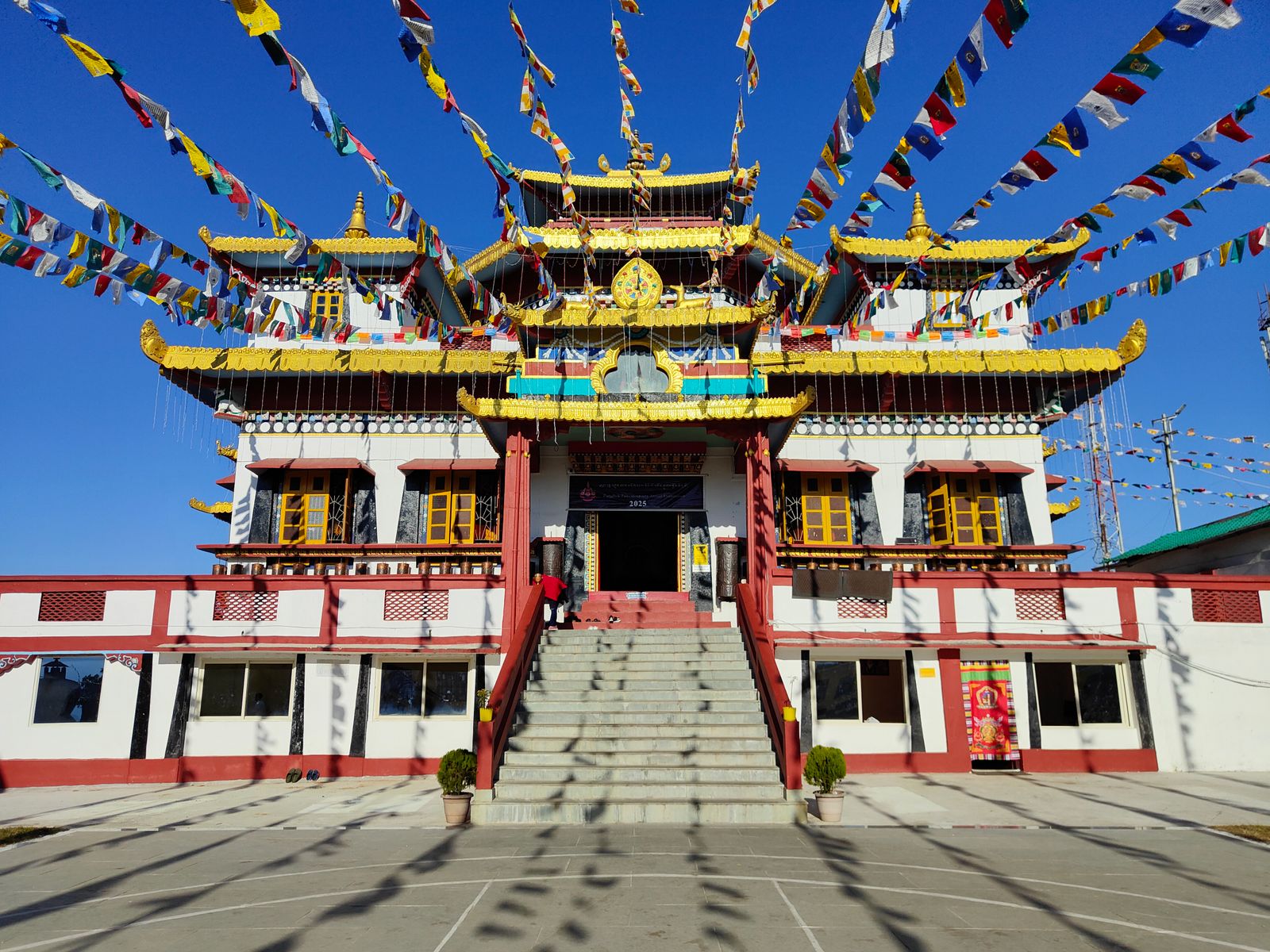
    The painted facade of Ghoom Monastery at Ghum, strung with prayer flags under a clear blue sky

    Tiger Hill at first light: our driver collected the vehicle token yesterday and the car leaves at 04:00. Breakfast at 08:00, then sleep. At 11:30 the car drops 3 km to Happy Valley, a garden since 1854 at about 2,100 m, for a walk between the old bushes and a cup of its tea. Late afternoon belongs to Chowrasta. At dusk we climb the short lane from the Mall to Mahakal on Observatory Hill, where a Hindu priest and a Buddhist monk keep their rituals side by side among lingams and prayer flags. By local tradition the town took its name from Dorje-Ling, the monastery that stood on this hilltop in 1765, when the ridge still belonged to Sikkim. Tomorrow you visit the monastery that moved from here.

    The momentA priest and a monk at their rituals side by side on Mahakal's hilltop, prayer flags thick above them at dusk.

    InsiderLook for Kanchenjunga again from Gangtok on day eight, to the west of town on a clear morning: the same mountain, seen from Sikkim's side.

    If the weather turnsIf the 03:30 forecast shows cloud, you sleep. Happy Valley shuts on Sundays and Mondays and its factory rests in winter, so we swap days five and six or keep to the cup.

    Meals
    Breakfast, Dinner
  6. Day 6 · Darjeeling

    Steam to Ghum, and a monastery that moved

    • 10 km, about 0.5 h
    • High point 2,258 m
    • Sleep at 2,045 m
    • Easy
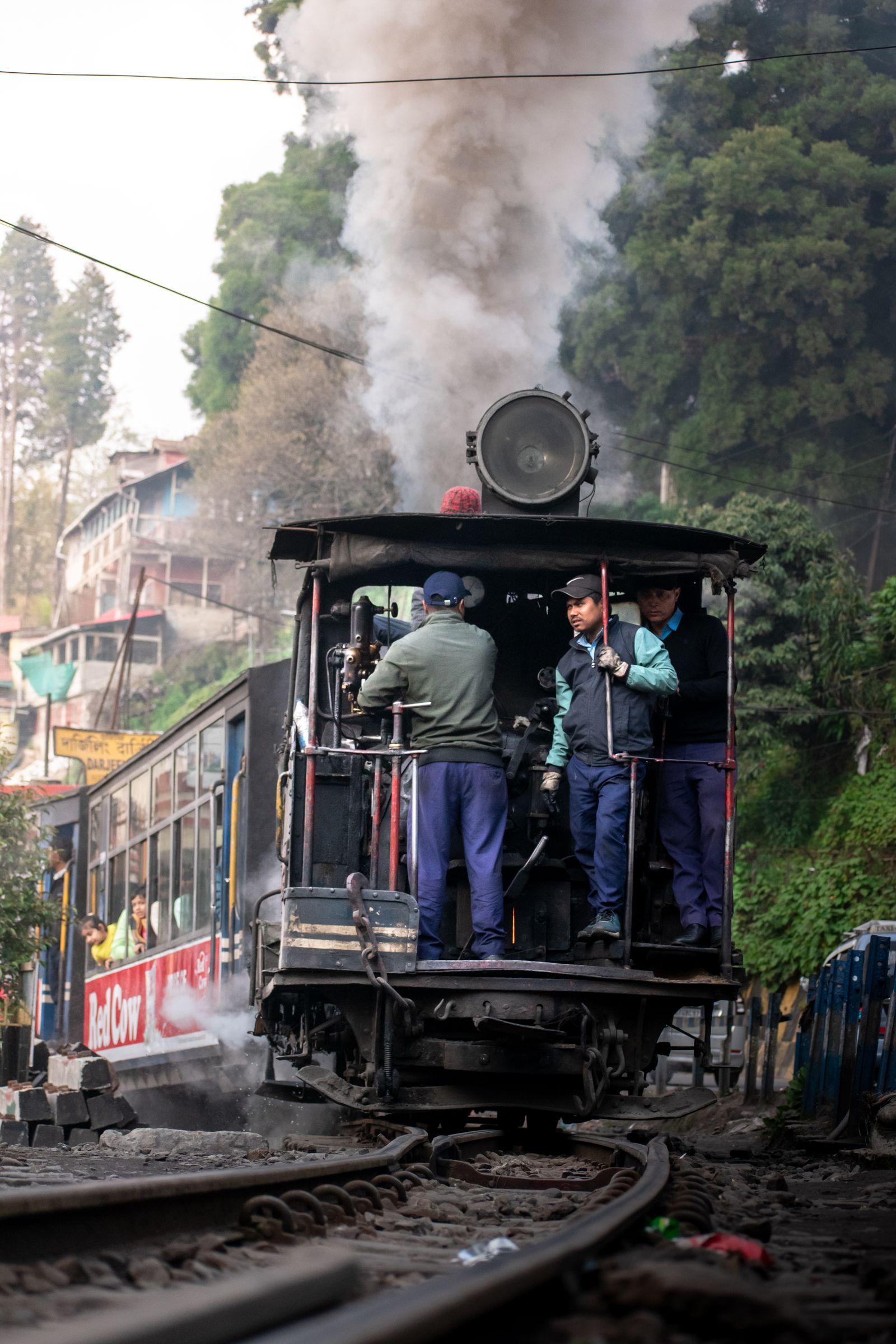
    Crew riding the front of a Darjeeling Himalayan Railway steam engine as it pulls away in a cloud of smoke

    A late start. The steam joy ride is yours in first-class seats, two hours out to Ghum and home, with a halt at the Batasia Loop. Lunch in town. At 14:30 we walk down to Bhutia Busty, the monastery that began as a branch of Phodong in Sikkim and first stood on Observatory Hill, until Nepali troops overran the ridge around 1788 and destroyed it. It moved to its present site in the nineteenth century, and after the 1934 earthquake the Chogyal of Sikkim helped rebuild it. It follows the Nyingma tradition today, though it began as Kagyu, and its library is said to hold an original copy of the Tibetan Book of the Dead; ask the monk on duty, respectfully, whether it may be seen. Tea by your fire, and dinner at the hotel.

    The momentA Sikkim monastery in a British hill town, moved there after a Nepali raid: three kingdoms in one prayer hall.

    InsiderThe steam joy ride has been all first class since 2024 and sells out in the Puja and Christmas weeks. We book the day seats open, not the week you arrive.

    If the weather turnsIf a slip or an engine fault stops the steam run, we book the diesel joy ride or walk to the Batasia garden to watch a train loop past.

    Meals
    Breakfast, Dinner
  7. Day 7 · Darjeeling Gangtok

    Down to the Teesta, up to the Chogyals' capital

    • 98 km, about 4.5 h
    • High point 2,045 m
    • Sleep at 1,650 m
    • Moderate
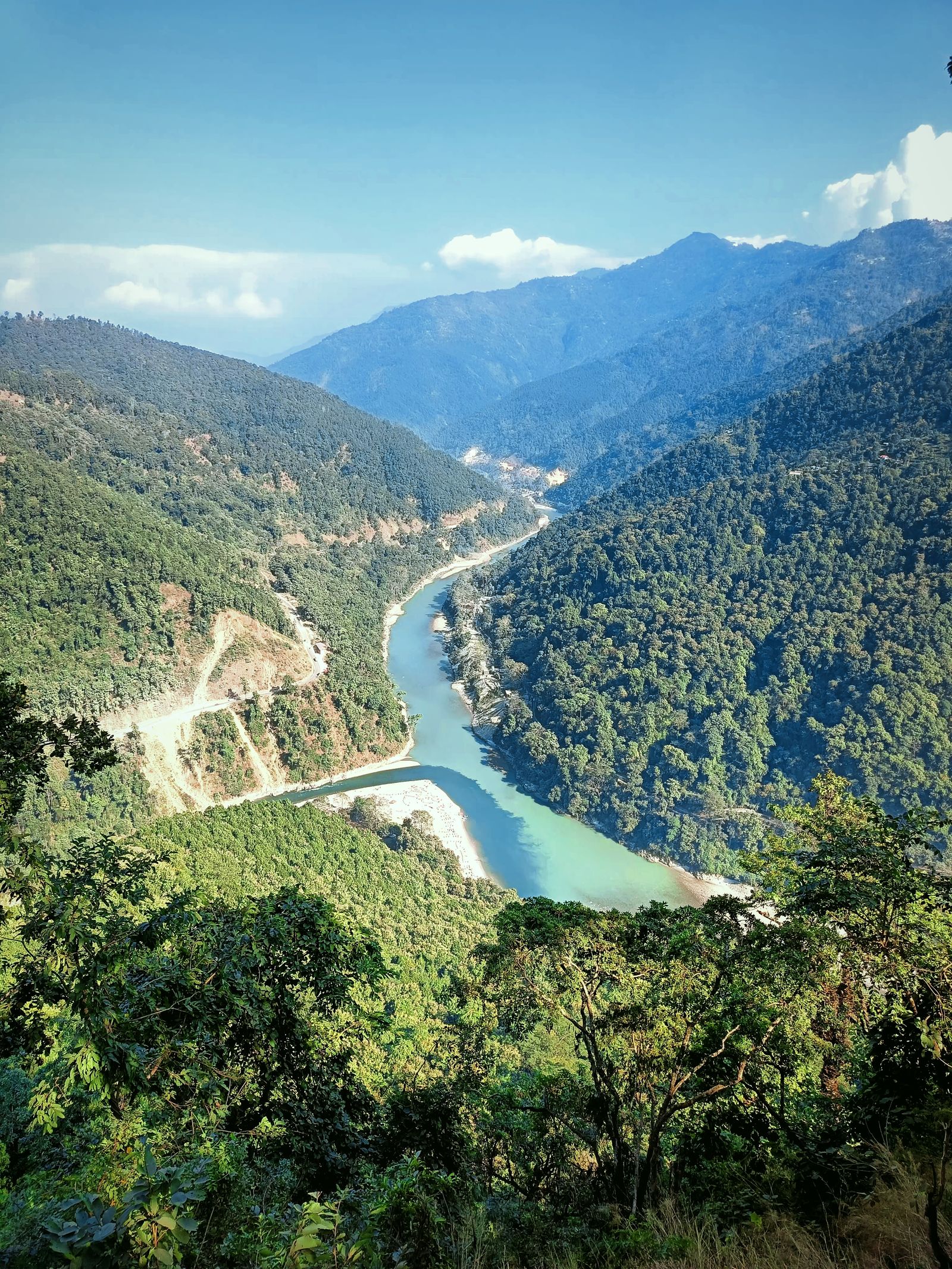
    The jade Teesta winding past pale sandbanks deep in its forested valley, seen from high on the ridge above

    We leave at 09:00 and drop through the Lopchu and Peshok tea gardens to the Teesta, the eastern edge of the land Titalia gave back to Sikkim in 1817. From there NH10 runs north, about four and a half hours in all from Darjeeling, to the gate at Rangpo, 333 m, where Sikkim begins: Indian guests drive straight on, and foreign and OCI guests show the permit we file ahead, which our planning guide sets out passport by passport under Permits and visas. Lunch in Gangtok around 13:30. At 14:45 the Namgyal Institute of Tibetology, whose foundation stone the Dalai Lama laid in February 1957 and which Nehru opened in October 1958, while Sikkim was still a kingdom. Your house is The Elgin Nor-Khill: a Chogyal put it up in 1932 to lodge the kingdom's visitors, and the Elgin group, which runs it now, dates the hotel from 1934. Nor-Khill means house of jewels, a phrase you meet again on day twelve above the Paro Chhu. Tea on the lawn at 17:30, dinner in the Shangri-La dining room.

    The momentCrossing the Teesta and knowing that the water under the bridge is the line the Treaty of Titalia drew in 1817.

    InsiderKeep the Sikkim permit as a PDF on your phone and a paper copy in your bag. Signal in the Teesta gorge comes and goes, and the checkpost will not wait for it.

    If the weather turnsIf slides shut NH10, we go round by Kalimpong, Pedong and Rhenock, about an hour longer. The Tibetology museum shuts on Sundays, so then it moves to tomorrow afternoon.

    Meals
    Breakfast, Dinner
  8. Day 8 · Gangtok

    Tsomgo in the morning, the royal chapel at dusk

    • 80 km, about 4.5 h
    • High point 3,753 m
    • Sleep at 1,650 m
    • Moderate
    Tsomgo Lake lying still below snow covered slopes, the ridges mirrored in its dark water under grey cloud

    At 07:30 a Sikkim-registered SUV takes you up to Tsomgo, 3,753 m, on the permit our registered Sikkim operator filed yesterday with your photo IDs; after three nights at 2,045 m in Darjeeling you arrive acclimatised, and your guide keeps the stop to about an hour. Indian citizens may add Nathu La, 4,310 m, on the days it opens, never a Monday or Tuesday; other passports top out at the lake. Back in Gangtok by 13:30 for a Sikkimese lunch. At 16:30 your guide takes you up the palace ridge to Tsuklakhang, the royal chapel where Sikkim's Chogyals were crowned, above the town their court moved to from Tumlong in 1894. Sikkim became India's 22nd state in 1975, and this ridge is where the kingdom's story is easiest to read. At dusk the driver drops you at the end of MG Marg, the car-free promenade, and waits.

    The momentOn the palace ridge by Tsuklakhang, where Sikkim's kings were crowned, as Gangtok's lights come on below.

    InsiderKagyed, the masked dances at Tsuklakhang, comes just before Losoong, which runs from 9 to 13 December in 2026. If your dates meet it, tell us, and we plan the Gangtok days around the courtyard.

    If the weather turnsIf snow or an army order shuts the Tsomgo road, the morning goes to Enchey, the Nyingma monastery above the town, and a slow hour on MG Marg.

    Meals
    Breakfast, Lunch, Dinner
  9. Day 9 · Gangtok Phuentsholing

    The long road to the Bhutan Gate

    • 230 km, about 7 h
    • High point 1,650 m
    • Sleep at 293 m
    • Moderate
    A painted gateway in Phuentsholing opening onto a flagstone court and a great prayer wheel inscribed in gold

    This is the journey's one long day, and we say so plainly: 230 km and about seven hours with stops. Away at 07:00, down NH10 to the plains, then east through the Dooars, tea gardens and forest edges, with a picnic the Nor-Khill kitchen packed at dawn. This is the land Bhutan ceded to British India by the Treaty of Sinchula, signed on 11 November 1865, with Kalimpong's hills, Bhutan's until the same treaty, to the north; in return Bhutan received an allowance that rose to 50,000 rupees a year. Behind the scenes, your Bhutanese guide was registered at the Phuentsholing land port 48 hours ago, as a September 2026 rule requires, and your entry permits were filed before you left home. Around 14:30 we reach Jaigaon, and the car rolls through the Bhutan Gate to Hotel Druk in the middle of Phuentsholing, where your guide waits in the lobby. After a rest, walk the town with him: in a few hundred metres the dress and the script on the signs change.

    The momentThe painted Bhutan Gate passing overhead, and your watch moving on half an hour.

    InsiderYour car from the hills stops here: an Indian car pays Nu 4,500 a day beyond the town, so a Bhutanese SUV and driver take over at breakfast.

    If the weather turnsIf NH10 is shut, we take the hill road through Pedong, Lava and Gorubathan, two to three hours longer, or keep you a second night in Gangtok and move Bhutan back a day.

    Meals
    Breakfast, Lunch, Dinner
  10. Day 10 · Phuentsholing Thimphu

    Up the Wang Chhu to Bhutan's capital

    • 150 km, about 5.5 h
    • High point 2,320 m
    • Sleep at 2,320 m
    • Moderate
    Tashichho Dzong and the National Assembly hall on the Thimphu valley floor, the capital climbing the slope behind

    Formalities first. Your guide takes you to the immigration office when it opens with the paperwork already prepared, and by about 10:00 we are climbing. The Rinchending checkpost, a few kilometres up, looks at the permits once more. The road rises from 293 m through Gedu at about 2,000 m, drops into the Wang Chhu gorge at Chukha, and meets the Paro road at Chuzom, where the Paro Chhu joins the Wang Chhu. Lunch is on the way, at a stop your guide chooses by the pace of the day. At 16:00, just short of the city, we stop at Simtokha Dzong, raised by Zhabdrung Ngawang Namgyal around 1629 and the first of its kind in Bhutan. Some 300 slate carvings of saints and teachers run along its outer wall, and a Dzongkha language school still works inside. Pemako by 17:00: the old Taj Tashi, built to look like a fortress, in the middle of town.

    The momentSimtokha's slate saints, three hundred of them, catching the low sun at the end of a long climb.

    InsiderTake the first Thimphu evening slowly and drink water. You sleep about 2,000 m higher than last night, the biggest jump of the whole journey.

    If the weather turnsIf a slip stops traffic above Gedu, we wait it out with food and warm layers in the car, and Simtokha moves to tomorrow morning.

    Meals
    Breakfast, Lunch, Dinner
  11. Day 11 · Thimphu

    Prayer wheels at dawn, painters by morning

    • 20 km, about 1 h
    • High point 2,320 m
    • Sleep at 2,320 m
    • Easy
    A worshipper in traditional checked dress turning a row of red prayer wheels set into a whitewashed temple wall

    At 06:45 the car drops you at the Memorial Chorten, built in 1974 for the third king, Jigme Dorji Wangchuck. Thimphu's elderly come every morning to circle it clockwise and spin its big red prayer wheels, and you are welcome to fall in behind them. Breakfast, then the National Institute for Zorig Chusum at Kawajangsa, the school of the thirteen traditional arts founded in 1971. Students on courses of four to six years paint thangkas, carve wood and shape clay deities, and you watch from the doorways without a word. At 11:30 the car climbs to Kuensel Phodrang, where the Buddha Dordenma, 51.5 m of gilded bronze finished in 2015, looks down the length of the valley. Lunch in town. If a match is on this afternoon at Changlimithang, we sit at the archery ground: teams shoot at a painted target about 145 m away and dance when an arrow strikes home.

    The momentFalling into step behind grandmothers with prayer beads as the Memorial Chorten's wheels creak round.

    InsiderArchers trade kha shed, sung taunts, to put rivals off their aim. It is part of the sport, and your guide will translate the politer verses.

    If the weather turnsIf rain sets in, the Buddha Dordenma waits for the first clear hour and the wet one goes to Pemako's spa. We confirm the arts school's term dates when we book.

    Meals
    Breakfast, Lunch, Dinner
  12. Day 12 · Thimphu Paro

    To Paro, and the fortress on a heap of jewels

    • 60 km, about 1.5 h
    • High point 2,320 m
    • Sleep at 2,200 m
    • Easy
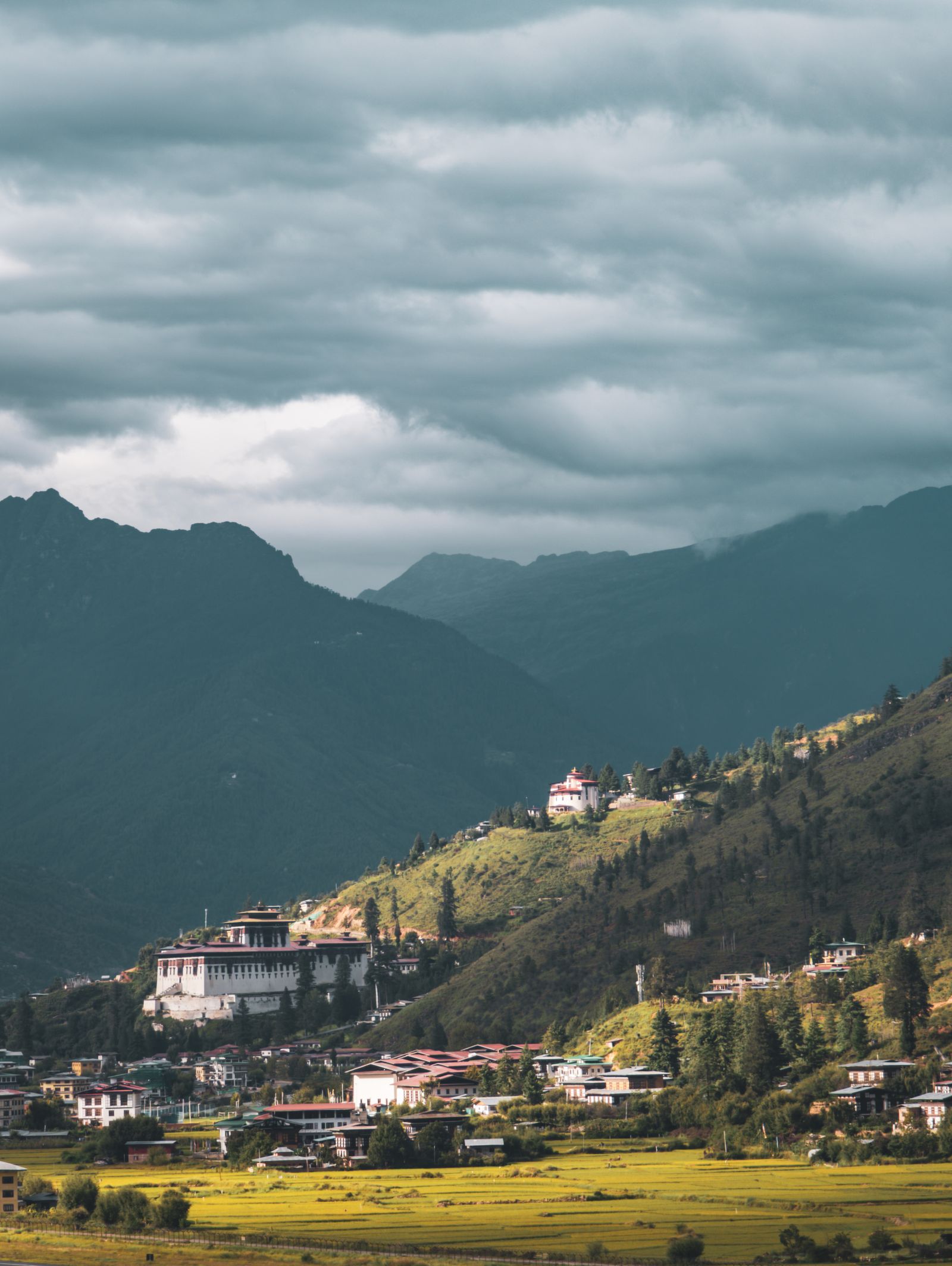
    Rinpung Dzong and the Ta Dzong watchtower on the hillside above Paro, ripe paddy in front and storm cloud behind

    No hurry this morning. At 09:30 the car takes the road back down to Chuzom, where the rivers meet, and turns up the valley to Paro, about an hour and a quarter. At 11:00 you begin above the town at Ta Dzong, the round watchtower completed in 1651 that has been the National Museum since 1968, with more than 3,000 works of Bhutanese art. A stone path leads down to Rinpung Dzong, consecrated in 1646, the fortress on a heap of jewels, and you leave it by the covered cantilever bridge, where the car waits on the far bank. Lunch in Paro town at 13:30, then COMO Uma Paro by 15:00, on a pine hill ten minutes from the airport. Bukhari, its restaurant, cooks from the hotel's kitchen garden, and your table is at 19:30. Tomorrow is the climb, so tonight is early.

    The momentCrossing the wooden cantilever bridge below Rinpung Dzong with the river loud beneath the boards.

    InsiderDzongs expect shoulders and knees covered. Carry a light jacket even on a warm day, and take off hats and sunglasses in the courtyards.

    If the weather turnsIf rain sets in, we give the museum longer and see the dzong from the bridge at dusk instead of walking its courtyards.

    Meals
    Breakfast, Lunch, Dinner
  13. Day 13 · Paro

    The Tiger's Nest, on legs that are ready

    • 20 km, about 1 h
    • High point 3,120 m
    • Sleep at 2,200 m
    • Active
    The waterfall below Taktsang falling in a long white thread down bare granite beside the trail to the monastery

    Twelve days of hills are in your legs, Tiger Hill at 2,590 m and Tsomgo at 3,753 m among them, which is why the climb waited until the thirteenth morning. Breakfast at 06:30 and walking by 07:30, ahead of the day groups; a pony is pre-booked to around halfway for anyone who would rather ride the lower stretch. Our Bhutan page sets out the path in figures and the current pony rules: /destinations/bhutan/#taktsang. What this route adds is a comparison you have earned. Fire gutted these buildings on 19 April 1998, and Bhutan had them standing again by 2005: of the three kingdoms on the road behind you, only this one was still a kingdom when it rebuilt its holiest place, Sikkim's crown having gone in 1975 and Nepal's in 2008. Inside, butter-lamp smoke, murmured prayer and cold rock. Lunch at the cafeteria on the way down, back at COMO by 14:30, and a COMO Shambhala massage at 17:00.

    The momentTurning at the monastery gate to see the Paro valley, the last of three kingdoms, far below.

    InsiderUse walking poles on the descent, not the climb. The loose grit on the way down tires knees far more than the ascent tires lungs.

    If the weather turnsIf rain makes the path slick, we climb only to the cafeteria viewpoint or wait for the afternoon, and the full climb takes tomorrow in place of Chele La.

    Meals
    Breakfast, Lunch, Dinner
  14. Day 14 · Paro

    Chele La at dawn, then a farmhouse table

    • 75 km, about 3 h
    • High point 3,988 m
    • Sleep at 2,200 m
    • Moderate
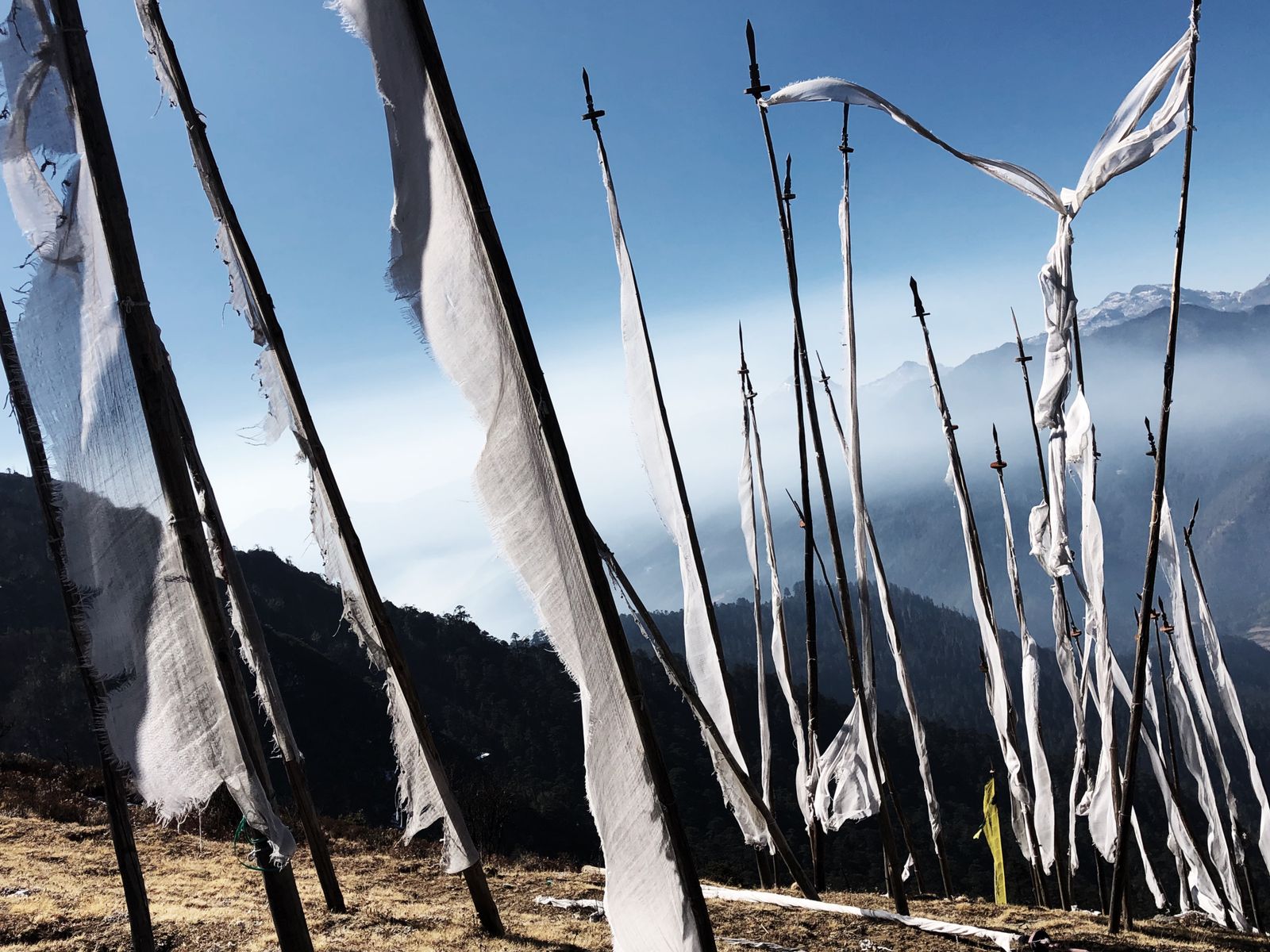
    White prayer flags on tall poles along a high ridge above Paro, snow peaks catching the light across the haze

    The clearest air comes early, so the car leaves at 07:00 for Chele La, 3,988 m, the highest point a road reaches in Bhutan, for Jomolhari to the north and the Haa valley below; we keep the stop under an hour. Back in the valley by 11:30 for lunch in a Paro farmhouse we arranged last week: red rice, ema datshi made as mild or fierce as you ask, and suja, the salted butter tea. Ema is chilli and datshi is cheese, and here the chilli is the main ingredient, not the seasoning; for gentler palates the cook makes kewa datshi, with potatoes. The afternoon is free for Paro town. The farewell dinner is at 19:30 at the hotel, and our 24x7 team in Darjeeling calls before it to go over the morning's flight times with you.

    The momentSuja poured at a Paro farmhouse table, fourteen days and three kingdoms from Kathmandu.

    InsiderChele La is far colder than Paro. The car carries down jackets, gloves and a flask of tea, and in the morning wind none of it is optional.

    If the weather turnsIf snow or cloud closes the pass, we turn back at the tree line and give the morning to the farmhouse instead, with an archery match if one is on.

    Meals
    Breakfast, Lunch, Dinner
  15. Day 15 · Paro Paro airport (PBH)

    Paro to home, the airport ten minutes away

    • 10 km, about 0.5 h
    • High point 2,235 m
    • Easy
    Paro airport's terminal buildings and runway on the valley floor, pine ridges and cloud topped peaks rising behind

    The last morning is short on purpose. Breakfast at 07:00, bags collected from your door at 07:45, and ten minutes down the hill to the terminal for Drukair's 09:40 to Delhi, the one daily flight to India in the October 2026 schedule. Kolkata flights leave at 11:30 on Wednesdays and Saturdays and the Bagdogra flight at 16:20 on Mondays and Fridays, which gives a slow last morning if you are heading back to the hills. Your guide stays with you to the security line. Paro flies only in daylight and good visibility, so we leave at least four hours before any onward connection. After fourteen nights and three borders, check-in at this painted timber terminal is the simplest formality of the journey. Your 24x7 contact watches the flight until you are on the ground.

    The momentThe valley falling away beneath the wing as the aircraft climbs out between the ridges.

    InsiderParo never flies after dark, so bad weather means a wait, not a night departure. We ask COMO for a late check-out on your last morning, in case.

    If the weather turnsIf weather cancels the flight, we take you back to COMO or a nearby hotel, rebook the next seat out of Paro and move your onward tickets.

    Tonight
    Homeward
    Meals
    Breakfast

Where you will stay

Where you sleep, six houses

The Dwarika's Hotel, MAYFAIR Hill Resort, Darjeeling, The Elgin Nor-Khill, Gangtok, Hotel Druk, Phuentsholing, Pemako Thimphu and COMO Uma Paro. Prefer a different house on any night? Say which and we re-price it.

  1. A carved Newar door with an iron bolt and wooden lock at the Dwarika's hotel in Kathmandu
    A rescued Newar door at the Dwarika's, carved lattice, iron bolt and wooden lock.simonsimages, CC BY 2.0, via Wikimedia Commons
    3 nights

    The Dwarika's Hotel

    Kathmandu

    Its restoration workshop still rejoins old Newar carving for new wings; close to the domestic terminal for the 05:15 start and minutes from Pashupatinath.

    Ask for A Heritage Deluxe Room facing the inner courtyards; a Junior Suite if you want space to spread out

  2. The cream and yellow heritage building of the MAYFAIR Hill Resort in Darjeeling above its planted garden and statuary
    The MAYFAIR at Darjeeling, above its garden opposite Raj Bhawan.Mr. Debapriya Hore, CC BY-SA 4.0, via Wikimedia Commons
    3 nights

    MAYFAIR Hill Resort, Darjeeling

    Darjeeling

    Opposite Raj Bhavan, with a spa, a library and a doctor on call: warm, easy comfort after the border day.

    Ask for A Heritage Room with a fireplace, in the old main building

    • WarmthHeritage Rooms come with fireplaces, described as keeping occupants warm and cosy.
    • Getting inDoctor on call, described as a physician ready at all times.
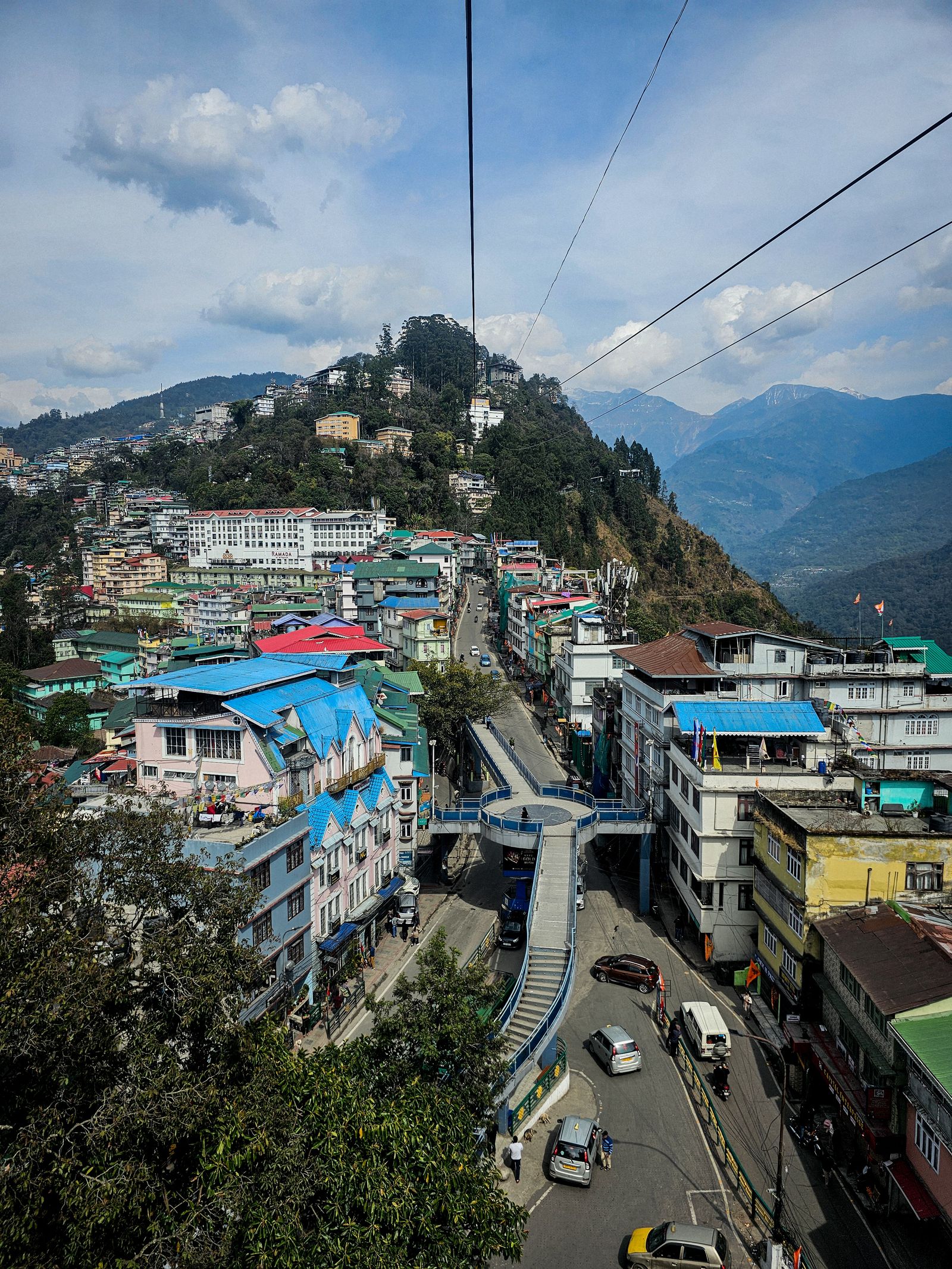
  3. Gangtok seen from above, coloured buildings stacked down the ridge with a footbridge over the road and hills beyond
    Gangtok from above, the town the Nor-Khill sits in the middle of.Ahad Hasan / Pexels
    2 nights

    The Elgin Nor-Khill, Gangtok

    Gangtok

    Built in 1932 as the Chogyal's guest house, and a hotel that the Elgin group dates from 1934: the right house for a journey about kingdoms.

    Ask for A Premium Suite for space; a Deluxe Double is the from-price room

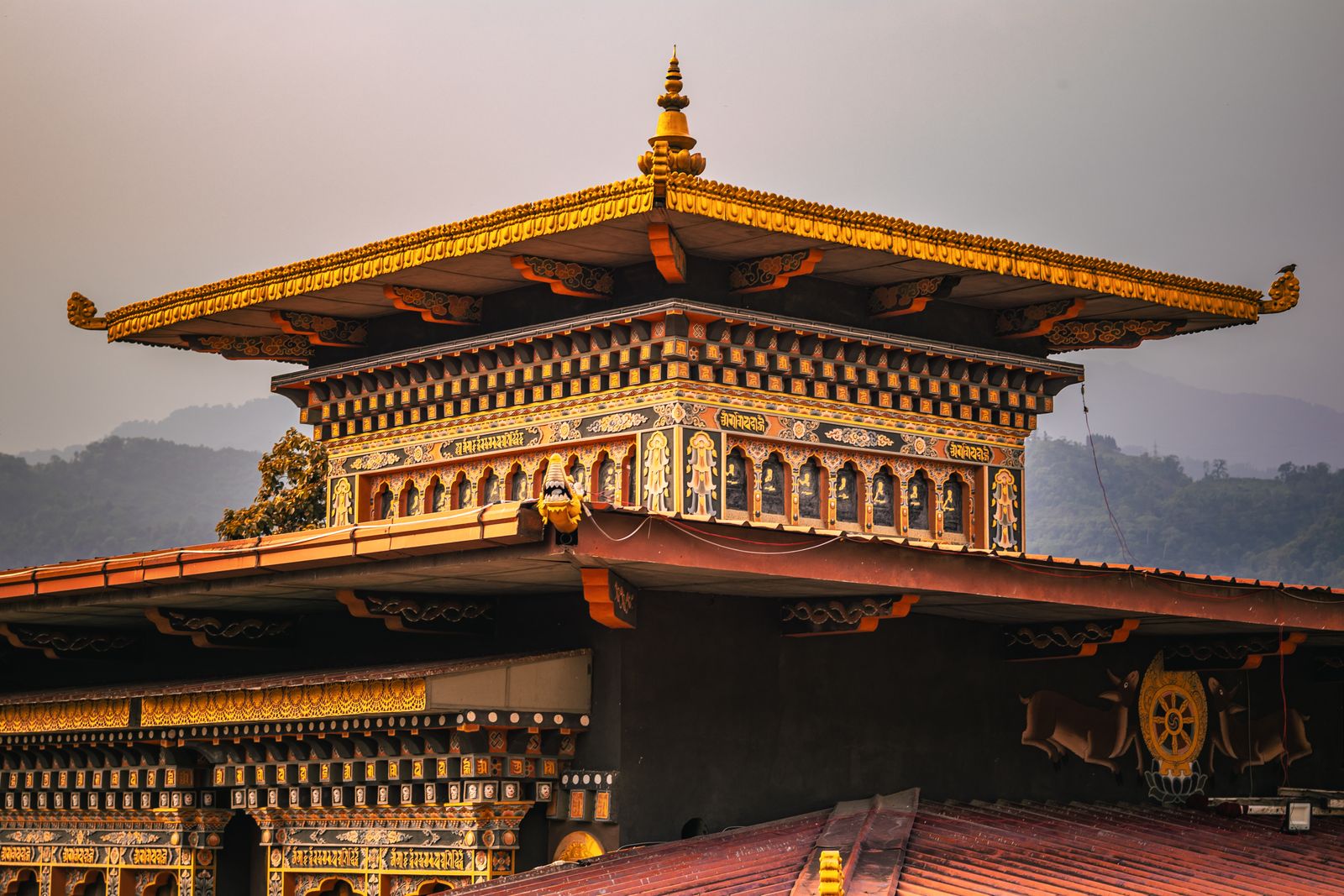
  4. The gilded roof and painted eaves of a Bhutanese temple in the border town of Phuentsholing
    A Bhutanese temple roof in Phuentsholing, the border town where the hotel stands.Soham Kundu / Pexels
    1 night

    Hotel Druk, Phuentsholing

    Phuentsholing

    A clean, central town hotel close to the gate and the immigration office. Simple, not luxurious, and chosen for the morning's paperwork.

    Ask for One of the hotel's two Junior Suites, for room to spread out on the one night at the border

  5. The ochre and timber front of the hotel in Thimphu built as the Taj Tashi, now Pemako Thimphu
    The house itself in central Thimphu, photographed while it still traded as the Taj Tashi.Christopher J. Fynn, CC BY-SA 4.0, via Wikimedia Commons
    2 nights

    Pemako Thimphu

    Thimphu

    The old Taj Tashi, built like a fortress and painted inside with hand-drawn murals, in the middle of the capital.

    Ask for A Deluxe Room, the from-price; the Deluxe Room with private sit-out costs more and adds a balcony

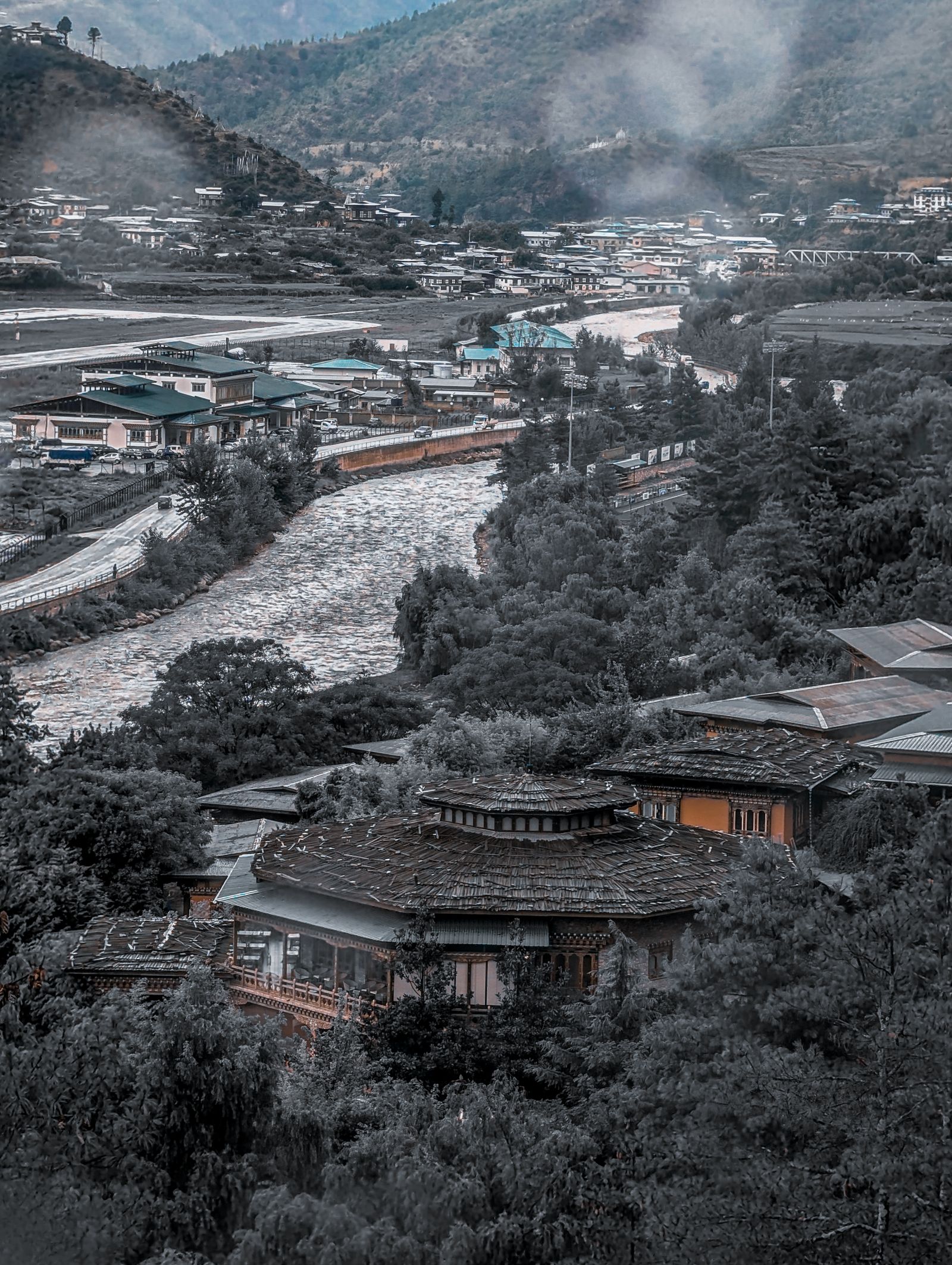
  6. A Bhutanese building among pines on a hillside above the Paro river and the town of Paro
    The pine hillside over the Paro river and valley that the hotel looks down on.Thinho 7 / Pexels
    3 nights

    COMO Uma Paro

    Paro

    Ten minutes above the airport among pines, with a COMO Shambhala spa for the evening after Taktsang and a restaurant fed by its kitchen garden.

    Ask for A Valley View Room for the long view up the valley; Forest View Rooms, the from-price, look into the pines

    • Getting inForest Rooms are on the main floor close to the lobby
    • BathroomValley Rooms have a bathtub with a separate shower stall; Forest Rooms have a walk in shower only

Price and what it covers

from₹5,70,000

per person, two sharing; Bhutan's six nights of SDF at the Indian-national rate. How our prices are built

About £4,450 or US$5,940 at the rates of 19 September 2026.

On other passports, about ₹6,24,000 (£4,870, US$6,500). Bhutan's Sustainable Development Fee is US$100 a night for most visitors, against ₹1,200 for Indian passports, for 6 nights here, plus a US$40 visa. How the fee works

Included

  • Private cars with drivers in every country: a Kathmandu car, a Toyota Innova Crysta or similar in Darjeeling, a Sikkim-registered SUV in Sikkim and a Bhutanese SUV in Bhutan
  • Licensed local guides throughout: Kathmandu valley, Darjeeling, Gangtok, and the Bhutanese guide Bhutan requires, registered at Phuentsholing 48 hours ahead
  • Flights in economy: Buddha Air's Everest Experience and Buddha Air Kathmandu to Bhadrapur
  • Fourteen nights for two sharing in the six houses named, breakfast every morning and dinner wherever the day plan shows it
  • Bhutan's entry permits, filed online, and the Sustainable Development Fee for six nights: ₹7,200 for an Indian adult
  • Sikkim: the Tsomgo protected-area permit, the ₹50 Sikkim tourist fee, and help with the online Restricted Area Permit for foreign guests
  • The Tiger Hill token and tower seats, and the steam joy ride in first class
  • Entry fees at every monument, museum and heritage zone on the route, including Taktsang and the Kathmandu valley squares
  • Meetings at Kathmandu airport, Bhadrapur, Panitanki, Phuentsholing and Paro airport, with luggage handled at each
  • A pre-booked Taktsang pony if wanted, the Happy Valley garden visit, a Paro farmhouse lunch and one COMO Shambhala massage each
  • Oxygen, water and warm layers carried in the car on the Tsomgo and Chele La days
  • Our Darjeeling team on call 24x7 across all three countries, from Tribhuvan to Paro

Not included

  • International flights into Kathmandu and home from Paro
  • Visa fees: the Nepal visa on arrival and Bhutan visa (US$40) for foreign nationals, and any Indian visa
  • For other passports, Bhutan's SDF at US$100 a night, US$600 for these six nights, in place of the Indian rate
  • Travel insurance, which must cover medical evacuation
  • Tips for guides, drivers and hotel staff
  • Drinks, laundry and meals outside the day plan
  • The optional add-ons below

Make it more Arranged on request, priced in your quote

  • Nathu La for Indian citizensAdd the 4,310 m pass to the Tsomgo day on the days it opens, with the permit filed the evening before.
  • Helicopter breakfast facing EverestKathmandu to Hotel Everest View at 3,880 m, subject to your doctor's advice, the weather and seats.
  • Your own steam train in DarjeelingA private B-class steam charter on the Darjeeling line, subject to the railway's approval and engines that week.
  • A night in the Haa valleyStay on beyond Chele La for one night in a Haa farmhouse, the quietest valley in western Bhutan.

Before you go

Before you go on this route

Choose another journey ifIf you are short of time or would rather not spend seven hours on one road day, choose Two Himalayan Capitals, which flies from Kathmandu straight to Paro.

  1. Indian guests: travel on a passport, which every border on this route accepts. What else is accepted, and for whom, is on the Permits and visas page of the planning guide.
  2. Foreign passports: hold a regular Indian tourist visa before you travel, because Panitanki does not admit e-Visa holders. Nepal's visa is bought on arrival at Kathmandu.
  3. Foreign and OCI guests also need Sikkim's permit, filed online through e-FRRO about 30 days ahead, and a Bhutan visa, which we file with your entry permit.
  4. Clothing: Darjeeling nights average about 3.5 °C in December, Bhutan's valleys fall below freezing, and Tsomgo and Chele La are colder still. Pack layers, a down jacket, gloves and walking shoes, and cover shoulders and knees in temples and dzongs.
  5. Altitude: you never sleep above 2,320 m. Tsomgo, Taktsang and Chele La are day visits, and anyone with heart or lung conditions should ask their doctor before booking.
  6. Money in three currencies, and where cards and UPI work, is covered under Before you travel in our planning guide.
  7. Phones: Indian SIMs roam patchily in Nepal and Bhutan. We arrange a local SIM at Kathmandu and in Bhutan, and signal drops on the Teesta and Tsomgo roads.
  8. Luggage: soft bags travel best on the Bhadrapur flight, whose allowance is smaller than an international one. We confirm yours on the ticket.

Questions

Five questions about Three Kingdoms

Ask on WhatsApp
Can you really see Nepal, Sikkim and Bhutan in one trip?

Yes, if you give it two weeks. Three Kingdoms takes fourteen nights: three in Kathmandu, a 45-minute flight to Bhadrapur and a walk over the Mechi bridge into India, three nights in Darjeeling and two in Gangtok, a night at the Bhutan Gate, then five in Thimphu and Paro before you fly home. Every place but the border town gets two nights or more, which is what stops it feeling like a race.

What does each passport need at the three borders?

Indian citizens cross all three on a passport, which Nepal's airports, Sikkim's high permits and Bhutan all accept. Foreign guests need a regular Indian tourist visa, because Panitanki does not admit e-Visa holders, plus Sikkim's permit through e-FRRO about 30 days ahead and a Bhutan visa filed with the entry permit. OCI cardholders follow the foreign rules. The Permits and visas page of our planning guide lists every document.

Is Three Kingdoms too long for us?

Choose it if you have two weeks and want all three countries by road. With eight nights, Two Himalayan Capitals flies from Kathmandu straight to Paro and leaves out India, while Across the Mechi joins Darjeeling to Kathmandu. Two Kingdoms, eleven nights, keeps Sikkim and Bhutan and leaves out Nepal. Each is a slice of this journey, so tell us which borders matter most and we shape the rest around them.

What is the hardest day, and can it be softened?

Day nine: 230 km and about seven hours from Gangtok to the Bhutan Gate, the only day that long, with a picnic and stops. It can be split with a night in Kalimpong or the Dooars, which adds a night to the journey. Physically, day thirteen's climb to Taktsang asks the most, and a pony can carry you the first half. Tsomgo and Chele La are short day visits, and you never sleep above 2,320 m.

What ties these three kingdoms together?

A language and a string of treaties. Nepali, called Gorkha Bhasa after Nepal's unification, is spoken in Kathmandu and Darjeeling, is Sikkim's official language and is heard in southern Bhutan too. The borders came from wars: Nepal gave up the land east of the Mechi in 1816, Sikkim gave the Darjeeling ridge to the Company in 1835, and Bhutan ceded the Dooars in 1865. Of the three kingdoms, only Bhutan still has its king.

Sources we checked for this itinerary (56)
  1. Buddha Air Kathmandu to Bhadrapur flights U4 951 07:00, U4 953 09:45 to 10:30, U4 955 11:25, daily, 45 minutes
  2. Buddha Air operates 5 daily Kathmandu to Bhadrapur flights, 45 to 50 minutes
  3. Everest Experience from 06:15, about one hour, window seat for every passenger, Everest about 20 miles from the window, peaks named
  4. India e-Visa land entry ports include Jaigaon but not Panitanki; departure allowed from any ICP including Jaigaon
  5. Kakarbhitta 21 km from Bhadrapur airport and 21.5 km from Bagdogra; visa on arrival for Nepal at Kakarbhitta
  6. Indians flying to or from Nepal need a passport or original Voter ID; Aadhaar, PAN, driving licence not accepted
  7. Dwarika's: carving rescued since 1952, Heritage Rooms on courtyards, Krishnarpan drawn from six farms, restoration workshop, evening arati experience
  8. Patan Museum in Keshav Narayan Chowk, opened 1997, Austrian-led restoration, about 200 objects on display, cast bronzes and gilt copper repousse
  9. Nyatapola completed July 1702; Pottery Square in Bhaktapur
  10. Bagmati aarti by three priests daily; Mondays busiest
  11. Tiger Hill 2,590 m, 11 km from Darjeeling; vehicle tokens issued the day before
  12. Happy Valley Tea Estate founded 1854, 2,100 m, 3 km from town
  13. Glenary's, Darjeeling, founded 1885, operating
  14. HMI founded 4 November 1954, Tenzing Norgay first director of field training, Tenzing memorial
  15. Darjeeling zoo at 2,134 m; snow leopard breeding since 1983, red panda since 1994
  16. Steam joy ride Darjeeling to Ghum, all first class, about two hours with 30 minutes at Ghum
  17. Namgyal Institute of Tibetology: foundation stone by the Dalai Lama 10 February 1957, opened by Nehru 1 October 1958
  18. The Elgin Nor-Khill: the Elgin group dates the hotel from 1934; 25 rooms, Kanchen garden favoured by the Chogyal, Shangri-La dining room
  19. Tsomgo 3,753 m, 40 km from Gangtok, 836 m long, name meaning source lake
  20. Sikkim RAP for foreigners online via e-FRRO from January 2026; PAP for Tsomgo in groups of two or more through registered operators
  21. Phuentsholing to Gangtok 230 km, 7 hours
  22. SDF Nu/INR 1,200 per night for Indians, half for children 6 to 11; guide mandatory; Indian vehicles charged Nu 4,500 a day; INR widely accepted
  23. Guides must be registered 48 hours before tourists enter at the Phuentsholing land port (September 2026)
  24. Hotel Druk Phuentsholing: 32 rooms including 2 junior suites, central
  25. Pemako Thimphu 2026 half-board rates checked for the Deluxe Room and the Deluxe Room with Balcony
  26. Simtokha Dzong built 1628 to 1629 by Zhabdrung Ngawang Namgyal, 5 km south of Thimphu, 300 slate carvings, Dzongkha institute
  27. Memorial Chorten built 1974 for the third king; elderly circumambulate daily and spin prayer wheels
  28. National Institute for Zorig Chusum founded 1971 at Kawajangsa, 4 to 6 year programmes; Buddha Dordenma built 2006 to 2015
  29. Buddha Dordenma 51.5 m; Thimphu 2,248 to 2,648 m; traffic police on Norzin Lam
  30. Bhutanese archery at about 145 m, kha shed taunts, dancing on a hit, Changlimithang
  31. National Museum in Ta Dzong, completed 1651, museum since 1968, over 3,000 works
  32. COMO Uma Paro 2026 half-board rates checked for Forest View and Valley View rooms
  33. Taktsang 3,120 m, 1692, 60 m waterfall; fire of 19 April 1998, restored by 2005; hike 6.4 km, 520 m ascent; ponies pre-booked, to about halfway
  34. Chele La 3,988 m, highest motorable point in Bhutan, 35 km from Paro, view of Jomolhari
  35. Indian ₹200 and ₹500 notes allowed in Nepal up to ₹25,000; ₹2,000 notes prohibited
  36. Namgyal Institute of Tibetology museum open 10:00 to 16:30 Monday to Saturday, closed Sundays and government holidays, entry ₹25
  37. Pemako Thimphu categories: Deluxe Room, Deluxe Room with private sit out, Luxury Room, Deluxe and Luxury Suites; fortress-like building with hand-drawn murals; Taj Tashi in image captions
  38. The Elgin Nor-Khill 2025-26 room rates checked (Deluxe Double/Twin, half board)
  39. Everest mountain flight 2026 fares checked for Indian and Nepali nationals and for foreigners
  40. Drukair October 2026: KB200 Paro to Delhi 09:40 daily; KB210 Paro to Kolkata 11:30 Wednesday and Saturday; KB130 Paro to Bagdogra 16:20 Monday and Friday
  41. Treaty of Titalia, 10 February 1817: land between the Mechi and Teesta, ceded to the Company by the Gorkhas under the 1816 Treaty of Sugauli, returned to Sikkim
  42. Treaty of Sugauli initialled at Sugauli in December 1815, signed and ratified on 4 March 1816; Nepal had conquered much of Sikkim before the war
  43. Chyasilin Mandap destroyed in the 1934 earthquake, rebuilt with German funding by Gotz Hagmuller and Niels Gutschow, completed 1990 on a modern steel frame, and undamaged in the 2015 earthquake while neighbouring buildings were not
  44. Treaty of Sinchula, 11 November 1865: Bhutan ceded the Eighteen Duars and the Assam Duars; an annual allowance rising to 50,000 rupees
  45. Kalimpong was Bhutan's until the Treaty of Sinchula in 1865
  46. Bhaktapur Durbar Square: Chyasilin Mandap raised by Srinivasa Malla as a sign of friendship with Jagat Prakasha Malla; Taleju bell offered by Ranajit Malla, the last monarch, on 6 January 1737; about 15 of 99 courtyards remain; the kingdom conquered in 1769
  47. Patan Durbar Square: Srinivasa Malla built the Bhimsen temple in 1680 and rebuilt the Taleju temple in 1667 after a fire; Taleju Bhawani the Malla kings' personal deity, five-storey temple; Keshav Narayan Chowk inside the Patan Museum
  48. Bhutia Busty Monastery: a branch of Phodong in Sikkim, first on Observatory Hill, destroyed around 1788 by Nepali troops; later moved to Bhutia Busty; rebuilt with the Chogyal's help after the 1934 earthquake; one of the original pieces of the Book of the Dead; Nyingma, originally Kagyu
  49. Darjeeling: 1835 deed presenting the ridge to the East India Company
  50. Mahakal: Dorje-Ling monastery on Observatory Hill in 1765; Hindu and Buddhist worship side by side
  51. The Elgin Nor-Khill built in 1932 by the Chogyal as the royal guest house; acquired 1975; the Chogyal painted in the Kanchen garden
  52. Tsuklakhang, royal chapel of the Chogyals, used for coronations; Kagyed in December
  53. Gangtok: Chogyal court moved from Tumlong in 1894; Sikkim merged with India in 1975
  54. Nepali known as Gorkha Bhasa after Nepal's unification; official language of Sikkim
  55. Ema datshi: chilli the main ingredient with datshi cheese; kewa datshi with potatoes; suja butter tea with salt
  56. Rinpung Dzong consecrated 1646; the name means fortress on a heap of jewels; covered cantilever bridge below

Checked September 2026. We confirm permits, fees and flights again for your dates.

Plan my journey

Three Kingdoms, shaped around you

At its best October to mid December, March to April. Tell us your month and who is travelling, and we reply within 24 hours with this journey priced for your dates.

Length
14 nights
From
₹5,70,000 per person
At its best
October to mid December, March to April
Bases
Kathmandu, Darjeeling, Gangtok, Phuentsholing, Thimphu, Paro
+91 86178 24110 Message a designer Support 24×7, every day of your journey

AboutThree Kingdoms, 14 nights

With country code if outside India. Either this or email is enough.
Who is coming, the pace you like, the occasion. A sentence is fine.
Add more detail
Their ages help: add them in your note
Permits in Sikkim and fees in Bhutan depend on it
This journey starts at ₹5,70,000 per person. Your band tells us which rooms to price.
Calls from our office, 8am to 9pm IST (GMT+5:30)
Darjeeling, Kalimpong, Gangtok, Pelling, Bhutan, Nepal

No deposit to begin, and nothing is booked until you say yes.